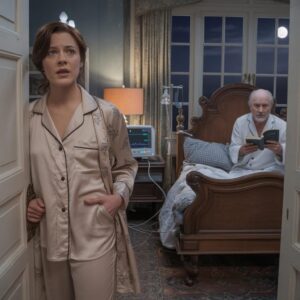
My husband’s whole family rolled their glossy suitcases out to the car for a Bahamas vacation and left me alone in that cold, oversized house to care for his half-paralyzed father, but at two in the morning I heard a sound from his room, opened the door, and found him sitting upright in bed with a ten-million-dollar file in his hands and a look that made me realize I had never truly known the family I married into. When Martha, my mother-in-law, left that afternoon, she stood in the doorway in a linen set that probably cost more than my old monthly paycheck and pointed a finger at me like I was hired help. “You take good care of him,” she said. “If anything happens to Arthur, you answer to me.” My husband didn’t defend me. David just dragged his suitcase down the front walk, glanced back once, and said, “This is your responsibility, Sarah. Don’t make it into drama.” Then they left for the airport laughing. I stood there holding a damp towel from my father-in-law’s sponge bath, listening to the sound of the car disappear down the street, and felt something settle in my chest that had nothing to do with sadness anymore. It was recognition. I had been living in that house long enough to understand what I was to them. Not a daughter-in-law. Not really a wife. A solution. I came from an ordinary family. I had worked as an accountant before marriage, kept my own bills paid, minded my own business, and thought marrying into money would at least mean security. Instead, it meant being slowly folded into a life where every dollar, every hour, and every ounce of energy started belonging to someone else. Once Arthur Kensington got sick, the whole house quietly shifted his care onto me. Meals. Medication. Laundry. Night checks. Sponge baths. Changing dressings. Lifting him when he slid sideways in bed. Listening for every cough after midnight. Martha stayed busy with church ladies and lunch dates. David stayed busy being “under pressure.” And I became the one person expected to be endlessly available. The strangest part was Arthur himself. Most days he lay still, one side of his body weak, his speech trapped somewhere behind his teeth. But his eyes were never empty. They followed me. Watched me. Sometimes when I adjusted his blanket or helped him sip water, he’d grip my wrist with surprising force and stare at me like he was trying to say something he could not safely say out loud. Once I found a bruise on his arm that didn’t make sense. Another time I noticed one of his pills looked slightly different from the usual prescription. When I called David about it, he cut me off so fast it left me cold. “Stop trying to play doctor,” he snapped. “Just do what you’re told.” That should have been the moment I understood how wrong everything was. But when you live inside a bad situation long enough, you start calling your fear exhaustion and your instinct overthinking. So I kept going. The first two nights alone in that house were awful. I slept on the long sofa outside Arthur’s room with one lamp on and a blanket over my legs, drifting in and out because the silence felt too sharp to trust. The whole place sounded different without Martha’s heels on the floor or David’s voice carrying from another room. Just the low hum of the respiratory machine and the wind finding a crack somewhere in the old window trim. On the third night, Arthur had a rough spell after dinner. His hand trembled so badly he could barely finish half a bowl of soup. I cleaned him up, changed his shirt, adjusted his pillows, and told him softly, the way I always did, “I’m here, Dad. Try to rest.” He held my hand longer than usual. His eyes were red. I didn’t understand it then. I do now. Sometime after 2:00 a.m., I woke with my heart already racing. There had been a noise. Not loud. Just wrong. A dull sound from Arthur’s room, like wood knocking lightly against something solid. I was off the sofa before I was fully awake. The hallway felt colder than it had a second earlier. I reached his door, pushed it open, and froze. Arthur Kensington was sitting up in bed. Not halfway. Not slumped. Sitting upright. His hands were braced against the mattress. His eyes were open and sharp, not clouded, not drifting, not helpless. He looked straight at me and lifted one hand in a quick, urgent motion toward the door. Close it. My fingers were shaking so badly I nearly missed the handle. I shut the door, turned back, and took a step toward him that didn’t feel real. “Dad?” I whispered. “What is happening?” He didn’t answer right away. He reached beneath his pillow, pulled out a folded sheaf of papers, and handed them to me. I unfolded the top page and saw more zeros than my brain could process. Asset transfer documents. A number in the millions. My mouth went dry. Arthur kept his eyes on me the whole time, breathing hard but steady, like a man who had been holding himself still for years and had finally decided he could not afford one more hour of silence. Then he spoke in a low, clear voice I had never heard from him before. “Lock the door, Sarah,” he said. “And listen carefully. They didn’t leave you here to help me survive.” (Details are listed in the first comment.)..
The House That Was Never Mine The day they left, the house felt bigger than it had ever been. Too big. Too quiet. Too empty. Laughter still…
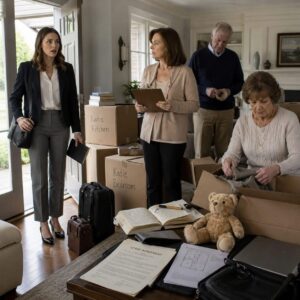
I Came Home Early From A Business Trip And Found My Parents Packing My Entire Life Into Boxes—They Said A Tiny Studio Was “Perfect For A Single Woman,” Then I Saw The Lease With My Name On It And Realized They Had Already Given My Home Away I knew something was wrong the moment I turned into my parents’ long driveway. There were boxes beside the front door. Not Amazon boxes. Not holiday decorations. Moving boxes. Large brown cardboard boxes stacked in neat, careful rows, labeled in my mother’s handwriting. Katie kitchen. Katie books. Katie bedroom. My hands tightened around the steering wheel. I had come home two days early from a business trip, still wearing my blazer from a client presentation in downtown Chicago, still riding the small rush of landing one of the biggest accounts of my career. I thought I might surprise my family. Maybe we would order dinner. Maybe I would finally tell them I had started seriously searching for my own apartment near work. Instead, I walked through the front door and found my entire life spread across the living room like an estate sale. My mother stood in the middle of it all with a clipboard. My father had packing tape in his hand. My Aunt Sylvia was folding one of my sweaters like she had every right to touch it. And on the coffee table sat my childhood teddy bear beside a lease agreement I had never seen before. My name is Catherine Parker, but everyone calls me Katie. I am twenty-seven years old. I have a degree from Northwestern, a senior marketing position at one of the most respected firms in Chicago, my own client portfolio, my own team, my own savings, and my own bills that I pay on time every single month. But in my parents’ eyes, I was still a child who needed to be managed. Directed. Protected. Moved. “Katie,” my mother said, her face shifting too quickly into a smile. “You’re home early.” That was all she said. Not, “Congratulations on your presentation.” Not, “Why didn’t you call?” Not even, “This looks bad, but let me explain.” Just that tight, polished smile I had spent my whole life trying to understand. I looked around the room. My bookshelves were empty. My dresser drawers had been pulled out. Framed photographs were wrapped in newspaper. A box of journals sat open on the dining table. My private journals. The ones I kept in the nightstand of the guest house where I had lived for five years. “Mom,” I said slowly, “what is going on?” She beamed like this was a celebration. “Surprise. We found you the perfect apartment.” For a moment, I genuinely could not process the words. Apartment? Perfect? Found? She picked up the papers and held them out like a gift. “It’s a darling studio in Oakbrook. Very safe. Very quiet. Sylvia lives five minutes away, so she can check in on you.” Check in on me. At twenty-seven years old. With a full-time career and an income my parents loved bragging about whenever it made them look good. I took the papers from her hand. The lease had my name typed into the tenant line. The apartment was barely five hundred square feet, with a kitchenette pressed against one wall and enough space for a bed if I did not mind living like a folded piece of laundry. “I never signed this,” I said. My father looked down at the tape dispenser. My mother waved her hand. “Oh, Katie, don’t be dramatic. We handled the deposit. The movers come Saturday.” Saturday. It was Wednesday. They were moving me in three days. Without asking. Without warning. Without my consent. I had lived in the guest house on their Northbrook property since college. It had started as temporary, just until I paid down student loans and figured out my next step. Then three months became five years. I paid rent. I paid my own bills. I bought my own groceries. The guest house had its own entrance, its own kitchen, its own life inside it. It was not perfect, but it was mine. Or at least I thought it was. “You went into my house?” I asked, my voice growing quieter. My mother’s smile flickered. “It’s our property, Catherine.” I heard it then. The truth beneath every argument we had ever had. Every time she criticized my haircut. Every time she questioned a man I was dating. Every time she warned me that downtown Chicago was dangerous, that photography was not practical, that I was too sensitive, too impulsive, too young, too naive. Our property. Our daughter. Our decision. I walked to the dining table and picked up one of my journals. The little ribbon bookmark was in a different place than I had left it. My stomach turned. “Did you read this?” My mother hesitated for half a second. That was all the answer I needed. A heat rose behind my eyes. “You read my journal?” “I needed to understand what’s been going on with you,” she said, as if I had forced her to do it. “You’ve been so secretive lately.” Secretive. That was what she called privacy. Then I saw my laptop bag on the chair. Open. My breath caught. “You went through my computer too?” My father finally spoke. “Katie, your mother was worried.” I laughed once, sharp and ugly. “Worried about what? That I might choose my own apartment?” My mother’s face hardened. “I saw those listings you were looking at. River North? Downtown? Those places are overpriced and unsafe. You were about to make a terrible mistake.” “So you made a decision for me.” “We helped you.” “No,” I said. “You trapped me.” The room went still. Even Aunt Sylvia stopped folding. My mother’s eyes narrowed. “You are overreacting.” There it was. The word that had followed me since childhood. Overreacting when I cried. Overreacting when I asked why she called my college roommate to check if I was studying. Overreacting when she “forgot” to mail an application for a school four states away. Overreacting when she told me a marketing job in Chicago was too demanding and I should find something closer to home. I looked at the boxes again. Then I noticed something missing. A small wooden jewelry box that had belonged to my grandmother. I kept it on the dresser in the guest house, not because it was expensive, but because inside were letters, tiny mementos, and a pressed flower from the last walk I ever took with her. “Where is Grandma’s jewelry box?” I asked. My parents exchanged a look. That look snapped something inside me. “Where is it?” My mother sighed like I was being difficult over a dish towel. “I gave it to Amber. She’ll appreciate it. You weren’t using it.” Amber. My cousin’s wife. The cousin who, I suddenly remembered, was renovating his house. A cold understanding moved through me. “Why does Amber need my things?” My mother lifted her chin. “Thomas and Amber need a place to stay while their renovation is finished. They’re moving into the guest house next month.” The guest house. My home. Given away. While they packed me into a studio apartment I had never seen. I turned to my father. “Did you know about this?” He looked ashamed, but he did not deny it. “Katie,” he said softly, “your mother put a lot of thought into this.” Those words hit harder than shouting would have. Because he knew. He knew this was wrong. He just chose peace with her over protecting me. I stood in the middle of that living room, surrounded by boxes with my name on them, and saw my whole life clearly for the first time. They had never been helping me. They had been keeping me close enough to control. My phone buzzed in my hand. Mom had called my office as my emergency contact. She had checked my schedule. She knew I was supposed to be gone until Friday. They had planned to move my life while I was not there to object. I looked at my mother. Then at my father. Then at the lease on the table. And for the first time in my life, I did not explain myself. I did not apologize. I did not cry where they could use it against me. I picked up my journal, slipped it into my purse, and walked toward the door. “Catherine Elizabeth Parker,” my mother snapped behind me, using the full-name voice that used to freeze me when I was sixteen. “Do not walk out that door.” I stopped at the threshold. My hand was on the knob. The whole house went quiet. Then I turned back and looked directly at her. “I’m twenty-seven years old,” I said. “You don’t get to tell me what to do anymore.” And then I walked out. But what my parents did not know was that I was not driving away to calm down. I was driving away to make one phone call. And by the next morning, the studio apartment was going to be the least of their problems. (I know you’re curious about the next part, so please be patient and read on in the comments below. Thank you for your understanding of the inconvenience. please leave a ‘YES’ comment below and give us a “Like ” to get full story ) 👇
I came home from my business trip two days early and walked into my own life being packed into boxes. My name is Katie Parker. I’m twenty-seven…
Homeless after getting out of prison, I found shelter in a hidden cave in the hills… and that’s when my life truly began. “Can I help you?” the man asked, wiping his hands on his jeans, his eyes sharp with suspicion. My throat was dry. My feet ached from walking. My heart pounded so hard it felt like it might burst. “My family used to live here,” I said slowly. “This was the Miller house.” He frowned, glancing at the children playing behind him before looking back at me. “We bought it eight years ago,” he replied. “From a woman named Elvira Miller.” My mother. Something inside me cracked. Not because the house was gone—I had already feared that. But because she had sold it while I was in prison. Without telling me. Without leaving anything behind. Without waiting for me to come home. “Are you sure this is the place?” he asked, his tone blunt. I pulled a worn photograph from my bag and held it out with trembling hands. “I grew up here. My grandfather planted that tree when I was nine.” He studied the picture. For a brief second, his expression softened… but not enough to offer help. “I’m sorry,” he said quietly. “There’s nothing I can do.” I nodded, holding onto what little pride I had left, and turned away before he could see my face fall apart. I walked through town feeling eyes on me. Some people recognized me—I saw it in the whispers, in the way they pulled their children closer. Eleven years later, I was still “the woman who went to prison,” not the one who survived it. At the old grocery store where my younger brother once worked, a girl stocking shelves told me my family had moved to new houses on the other side of the valley. New homes for everyone. Except me. That night, I had nowhere to go. I slept sitting up behind the chapel, clutching my bag as the cold pressed against my back. At sunrise, a thin stray dog watched me from a distance, like it recognized the same kind of loneliness. I looked toward the hills and remembered the stories the older women used to tell—about a cave hidden among rocks and brush, a place people avoided, calling it cursed. After eleven years in prison, a cave didn’t scare me. I climbed the hill with numb legs and an empty stomach. The entrance appeared behind tall stones and dry brush—a dark opening in the mountain. I stepped inside. The air was cold, heavy with the smell of damp stone and time. I dropped my bag, wrapped my arms around myself, and for the first time since leaving prison… I had something that felt like shelter. It wasn’t a home. But it was a place to disappear. I started gathering sticks and stones to build a small fire. When I shifted a flat rock near the wall, I heard a strange hollow sound. I froze. I tapped it again. The echo came back. My heart began to race. I dropped to my knees and started digging with my bare hands. Dirt packed under my nails. My fingers tore open. But I didn’t stop. Until I hit something solid. Wood. I cleared away the dirt and uncovered a small box wrapped in decayed cloth. A rusted latch held it closed… and carved into the lid were two initials that made my breath catch. T. M. My grandfather’s initials. I reached out to open it— And then I heard footsteps outside the cave. Whatever was inside that box was about to change everything. And whoever was walking toward me… was about to change it even more. 👇 Full story continues in the first comment…….
Aitana The footsteps stopped just outside the entrance. They were not the careless footsteps of someone wandering off a trail or stumbling through unfamiliar ground. They were…
When my son got married, I didn’t tell my daughter-in-law or even my son that the house they were living in was still mine. And I’m glad I didn’t—because not long after the wedding, my daughter-in-law and her mother tried to… …turn my own home into something I was supposed to “outgrow.” My name is Eleanor Lopez. I’m 70 years old, and I used to believe the hardest part of getting older was my knees aching when it rained. I was wrong. The hardest part is watching people smile at you while quietly trying to rearrange your life. Adrien is my only child. When he met Chloe, I told myself to be grateful—because a mother’s instinct is to want her son happy, even if that happiness comes with changes you don’t fully understand. Two months before the wedding, they asked if they could “stay with me for a while” to save money. I agreed immediately. That’s what mothers do when rent is high and you can hear the stress hidden in your child’s voice. What I didn’t say out loud was the part that mattered most. The deed was still in my name, filed years ago with the county recorder, and every property tax bill still arrived in my mailbox right on time. I had always planned to transfer the house to Adrien someday. But something inside me—call it instinct, call it experience—kept telling me, Not yet. After the wedding, Chloe arrived with suitcases that didn’t feel temporary. Then came boxes. Then came “improvements.” Then came small changes that felt harmless—until they weren’t. One morning, I walked downstairs and noticed my late husband’s portrait was gone from the entryway. In its place, Chloe had hung a gold-framed mirror, as if the house now needed to reflect her instead. Then Linda arrived. Chloe’s mother came for “just a few days,” but her toothbrush stayed, her opinions took over, and my kitchen started sounding like a renovation show I had never agreed to join. They measured walls. They discussed paint colors. They stood by my dining room window and talked about “opening the space” the way people talk about clearing out clutter. That Sunday afternoon, I was making coffee when I heard Chloe say my name—just my name. No “Mom.” No warmth. She smiled like she had rehearsed the moment. “Eleanor,” she said, “this house is too big for you to live in alone.” Then Linda nodded with that soft, practiced concern and added, “Stairs aren’t safe at your age… and you’ve already done your part as a mother.” That’s when I understood. This wasn’t about concern. It was about making me feel like I no longer belonged in the home I had built. I didn’t argue. I didn’t raise my voice. I set my coffee down, went to my room, and did what my friend Margaret always says when people start testing your boundaries: breathe, think, document. Because there was something Chloe and Linda didn’t know. Weeks earlier, I had already put a quiet plan in motion—paperwork reviewed, conversations saved, and one phone call made that could turn “family decisions” into “legal reality.” So later that evening, when Chloe slid a brochure across the counter—smiling like she was helping me—and said, “We found you a perfect little place,” I looked at her hand, then at Linda’s confident expression… …and I smiled back. Not because I had given up. But because I was ready.. Full in the first c0mment…
They say you can’t put a price on dignity. For a few months, I nearly let mine be taken for free. My name is Eleanor Lopez. I…
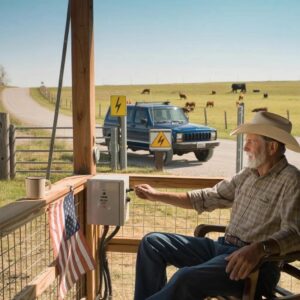
HOA Left Their SUV on Our Ranch — Grandpa Hooked It Up to the Electric Fence and Waited! If you think a ranch is just a scenic backdrop for someone else’s rules, you’ve never met my granddad—or his fence. That morning, the sky was a hard, perfect blue, the kind that makes the power lines hum like they’ve got something to say. A black SUV sat half-tilted against our cattlegate, chrome glinting in the sun like it owned the horizon. Granddad tipped his hat toward it, took a long, thoughtful sip of coffee, and murmured into the steam, “If they think this driveway is public parking, they’re about to learn what a boundary feels like.” I’d heard the tires before sunrise—a crunch that didn’t belong to any of our neighbors. By the time I stepped outside, he was already in his porch chair, boots planted steady as if he’d been waiting for this particular kind of nonsense his whole life. The SUV was parked so close to the hot wire you could’ve measured the gap with a dime. Tinted windows. Vanity plate from Sage Hollow Meadows, that gated kingdom over the ridge. A bumper sticker in gold script that read Pride of the Neighborhood. On our gravel, it looked about as natural as a tuxedo at a branding. Before I could even make a joke, the sound of heels on rock cut across the yard—sharp, fast, and full of purpose. A woman in a thundercloud-colored blazer marched down the lane, eyeing the house like it had failed some invisible inspection. “Morning,” she said. It didn’t sound like a greeting. “This vehicle is conducting official business. We’ll be removing it shortly.” Granddad didn’t even glance her way. He tasted his coffee, squinting at the horizon. “Official business on private land,” he said at last. “That new?” He nodded toward the fence—the one with the bright yellow sign and a lightning bolt we’ve had since forever. The wire hummed lazy in the quiet. She smiled the kind of smile that usually comes stapled to a fine. “I’m Lydia Crane, president of the Sage Hollow Meadows HOA. Your gate obstructs the community’s visibility easement. Our safety officer had to park to document the obstruction. This is evidence storage.” Granddad turned his head a fraction, studying the SUV the way he sizes up a bull—trying to decide if it’s smart, mean, or just confused. “Evidence storage,” he repeated slowly. “Friendly of you to park it two inches from a live fence.” Lydia’s eyes flicked toward the wire, dismissive. “I’m sure your line is turned off while we’re here,” she said. “Given the complaints we’ve received about stressed animals.” Her perfume smelled like citrus and paperwork. Granddad leaned back in his chair. “I don’t take orders from emails,” he said. “Barely take ’em from people.” That was usually my cue to translate, but Lydia was one of those folks who only heard the echo of their own voice. “We’ll have the SUV removed after our inspection,” she said briskly. “I recommend moving your gate to align with the HOA access apron. I’ll send an official notice.” Then she turned on her heel, satisfied, and strode back to the sedan idling by the road—two men in reflective vests waiting inside, the kind who wear authority like a Halloween costume. They didn’t get out. They didn’t need to. The HOA convoy disappeared in a spray of gravel that fell short of our boots. For a full minute, we listened to the quiet retake its claim. The hawk over the cottonwoods made a slow pass. The power regulator clicked. The cattle moved like slow thunder across the pasture. Granddad set his mug down on the arm of the chair and rose—slow, deliberate, the way he always did before doing something that would end up sounding like a lesson. Continue below👇…
The Fence That Hummed Back If you think a ranch is just a scenic backdrop for someone else’s rules, you’ve never met my granddad—or his fence. That…
I had gifted my parents a once-in-a-lifetime, luxury week in Europe—first class flights, five-star hotels, everything planned down to the last detail. But when I arrived to pick them up for the airport, my mother walked out with her suitcase… and right behind her was my sister, Lily, clutching a passport like she’d discovered treasure. Before I could even step out of the car, my mother leaned in through the window with a bright, almost rehearsed smile and said, “Sweetheart… we’ve decided Lily will come with us instead.” For a moment, I just blinked, thinking I’d misheard. I’d spent months arranging this trip. Switzerland. Lake Como. Paris. A full luxury itinerary I’d paid for myself, meant to be a thank-you for everything my parents had done over the years. And now Lily—the sister who hasn’t held a job longer than two weeks, who constantly “needs a break” from her life of doing absolutely nothing—stood beside them beaming like she’d earned her place. “You’re taking… Lily?” I managed. My father kept his eyes on the ground. My mother continued cheerfully, as if she hadn’t just **wounded** me: “Your sister has been sooo stressed lately. She needed this more than you.” Stressed… from what? Charging takeout to their credit card? But I didn’t argue. I didn’t ask them to reconsider. I didn’t even exhale too hard. I just opened the trunk, helped load their bags, and said, “Have a great trip.” Lily slid into the back seat with a victorious grin, the kind people wear when they think they’ve gotten away with something. I drove home in silence. Yes, I was hurt. But under that hurt, something far colder—and far **clearer**—started to take shape. Because my parents had no idea: Every reservation was under my name. Every hotel check-in required my passport. Every tour, transfer, and table booking needed my physical presence. And not a single one had been cancelled. I didn’t stop anything. I just let gravity do its work. Twenty-four hours later, when they arrived in Zurich expecting luxury, champagne, and comfort, they walked into a surprise so brutal that even Lily’s smug smile wouldn’t **last**. 👇 **To be continued in the first comment…** Posted onMay 28, 2026 ByadminNo Commentson I had gifted my parents a once-in-a-lifetime, luxury week in Europe—first class flights, five-star hotels, everything planned down to the last detail. But when I arrived to pick them up for the airport, my mother walked out with her suitcase… and right behind her was my sister, Lily, clutching a passport like she’d discovered treasure. Before I could even step out of the car, my mother leaned in through the window with a bright, almost rehearsed smile and said, “Sweetheart… we’ve decided Lily will come with us instead.” For a moment, I just blinked, thinking I’d misheard. I’d spent months arranging this trip. Switzerland. Lake Como. Paris. A full luxury itinerary I’d paid for myself, meant to be a thank-you for everything my parents had done over the years. And now Lily—the sister who hasn’t held a job longer than two weeks, who constantly “needs a break” from her life of doing absolutely nothing—stood beside them beaming like she’d earned her place. “You’re taking… Lily?” I managed. My father kept his eyes on the ground. My mother continued cheerfully, as if she hadn’t just **wounded** me: “Your sister has been sooo stressed lately. She needed this more than you.” Stressed… from what? Charging takeout to their credit card? But I didn’t argue. I didn’t ask them to reconsider. I didn’t even exhale too hard. I just opened the trunk, helped load their bags, and said, “Have a great trip.” Lily slid into the back seat with a victorious grin, the kind people wear when they think they’ve gotten away with something. I drove home in silence. Yes, I was hurt. But under that hurt, something far colder—and far **clearer**—started to take shape. Because my parents had no idea: Every reservation was under my name. Every hotel check-in required my passport. Every tour, transfer, and table booking needed my physical presence. And not a single one had been cancelled. I didn’t stop anything. I just let gravity do its work. Twenty-four hours later, when they arrived in Zurich expecting luxury, champagne, and comfort, they walked into a surprise so brutal that even Lily’s smug smile wouldn’t **last**. 👇 **To be continued in the first comment…**
The morning our long-planned European vacation was supposed to begin, I pulled into my parents’ driveway at precisely 6:00 AM with my car packed and ready for…
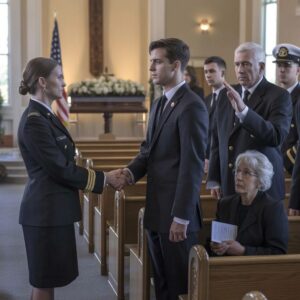
At my mother’s funeral, the dad who threw me out pregnant at sixteen smirked at my Navy dress blues and hissed, “So you finally learned your lesson,” expecting me to shrink, until I held his stare, said one quiet sentence, and my husband stepped forward in a way that made my father’s smile collapse. My name is Olivia Hail, and the last time my father looked me in the eye, he told me I was dead to him. Twenty years later, I stood beside my mother’s casket in a small Midwestern church, my ribbons neat, my jaw locked, my heart doing its best not to splinter. People I hadn’t seen since tenth grade kept sneaking glances at the uniform like it was a myth come to life. The room smelled like lilies and old coffee, and every whisper felt like it skimmed my neck. Dad stayed across the aisle, arms folded, as if grief were a contest he intended to dominate. When I arrived that morning, I found the daisies she loved drooping against the church steps. I touched the casket, whispered, “I’m here, Mom,” and felt my throat tighten. My father watched like a referee. My husband stayed just behind me, quiet, steady, ready for whatever came. I was sixteen when two pink lines rewrote everything. Matthew disappeared within a week, and I still remember my father’s chair scraping back when I finally said, “I’m pregnant.” He didn’t yell at first; he went quiet, the dangerous kind of quiet; then he pointed at the door and said, “If you walk out, don’t come back.” I walked into the cold with a backpack and a shaking hand over my stomach, sitting under flickering station lights until morning. Shame followed me everywhere, but so did something unyielding. I promised that baby I would build a life no one could strip away. A widowed librarian named Irene gave me a basement room and tea that tasted like shelter. She watched my daughter when I left for basic training, telling me, “Go earn the future they said you couldn’t.” Boot camp was brutal, but it was honest: you either stood up or you fell. I learned logistics, earned promotions, and came home on leave to sticky hugs and a little voice calling, “Mom!” Eventually I met the man who became my husband, steady hands, steady eyes, the kind of love that doesn’t punish you for surviving. Now, after the service, Dad finally crossed the fellowship hall and stopped inches from my shoulder. His aftershave was the same as my childhood, and his smile was the same too. He leaned in and whispered, “So you finally learned your lesson.” I looked at him, calm as a still tide, and said, “No, I finally learned who you are.” Then I turned slightly and said, “Yeah… meet my husband.” My father’s gaze slid past me, locked onto the man beside me, and his face emptied as a hand reached toward his. Full story in the first comment…… Posted onMay 28, 2026 ByadminNo Commentson At my mother’s funeral, the dad who threw me out pregnant at sixteen smirked at my Navy dress blues and hissed, “So you finally learned your lesson,” expecting me to shrink, until I held his stare, said one quiet sentence, and my husband stepped forward in a way that made my father’s smile collapse. My name is Olivia Hail, and the last time my father looked me in the eye, he told me I was dead to him. Twenty years later, I stood beside my mother’s casket in a small Midwestern church, my ribbons neat, my jaw locked, my heart doing its best not to splinter. People I hadn’t seen since tenth grade kept sneaking glances at the uniform like it was a myth come to life. The room smelled like lilies and old coffee, and every whisper felt like it skimmed my neck. Dad stayed across the aisle, arms folded, as if grief were a contest he intended to dominate. When I arrived that morning, I found the daisies she loved drooping against the church steps. I touched the casket, whispered, “I’m here, Mom,” and felt my throat tighten. My father watched like a referee. My husband stayed just behind me, quiet, steady, ready for whatever came. I was sixteen when two pink lines rewrote everything. Matthew disappeared within a week, and I still remember my father’s chair scraping back when I finally said, “I’m pregnant.” He didn’t yell at first; he went quiet, the dangerous kind of quiet; then he pointed at the door and said, “If you walk out, don’t come back.” I walked into the cold with a backpack and a shaking hand over my stomach, sitting under flickering station lights until morning. Shame followed me everywhere, but so did something unyielding. I promised that baby I would build a life no one could strip away. A widowed librarian named Irene gave me a basement room and tea that tasted like shelter. She watched my daughter when I left for basic training, telling me, “Go earn the future they said you couldn’t.” Boot camp was brutal, but it was honest: you either stood up or you fell. I learned logistics, earned promotions, and came home on leave to sticky hugs and a little voice calling, “Mom!” Eventually I met the man who became my husband, steady hands, steady eyes, the kind of love that doesn’t punish you for surviving. Now, after the service, Dad finally crossed the fellowship hall and stopped inches from my shoulder. His aftershave was the same as my childhood, and his smile was the same too. He leaned in and whispered, “So you finally learned your lesson.” I looked at him, calm as a still tide, and said, “No, I finally learned who you are.” Then I turned slightly and said, “Yeah… meet my husband.” My father’s gaze slid past me, locked onto the man beside me, and his face emptied as a hand reached toward his. Full story in the first comment……
The Uniform My name is Olivia Hail, and the last time my father looked me in the eye, he told me I was dead to him. That…
My sister screamed that I was ruining her $4,200 birthday dinner, my father slapped me in the middle of my own Charleston restaurant and told me to leave, and I probably would have walked straight into the night if the head chef hadn’t stepped out of the kitchen, stopped beside Table 12, and asked one question that made the entire room forget whose birthday it was. Friday night service at Lark and Laurel begins long before the first guest ever walks in. By 5:15, I was doing what I always do—checking candles, adjusting menus, pretending I wasn’t anxious about things I had already controlled. Then I saw the reservation. Table 12. 7:30. Party of six. Carter. Sutton’s birthday. My last name. My sister’s name. In my restaurant. I called my business partner, Nina, and told her my family had somehow booked a dinner at the place they had never once asked about. Not when I moved to Charleston. Not when the feature article came out. Not when the waitlist stretched to six weeks. “Stay in the kitchen,” she said. I didn’t. That was my mistake. I changed into a black dress in my office so I could pass as a guest instead of the woman who had spent three years building that space from a gutted warehouse, sleepless payroll nights, and one recipe my mother had taught me before she passed. My father was already seated at the head of the table when I stepped out. Of course he was. Frank Carter, navy blazer, sitting like the room belonged to him simply because someone had pulled out his chair. Sutton glowed beside him, phone in hand, already posing for pictures that hadn’t even been taken yet. There was one empty seat. At the end. Slightly off to the side. There is always a seat like that—for the daughter no one plans around. The first twenty minutes unfolded the same way they always did. Sutton was the center, everyone else faded into the background, and I was expected to smile like that counted as participation. She ordered champagne “for fun.” My father raised a toast “to the daughter who always makes him proud.” One of Sutton’s friends asked what I was doing these days, and before I could answer, Sutton laughed. “She’s a cook somewhere downtown,” she said. “She’s always had that little food thing.” The food thing. Not the restaurant. Not the business. Not the menu I had rewritten dozens of times. Not the staff whose rent depended on my decisions. Just… the food thing. Then the entrées arrived. Sutton ordered the Laurel—the signature dish, built from my mother’s old crawfish étouffée recipe, refined over years until critics wrote about it like it meant something. She took one bite and closed her eyes. “Oh my God. This is amazing.” My father leaned over, took a forkful, chewed, and nodded. “Not bad.” I should have let it go. Instead, I gave her the birthday gift I had wrapped myself between prep and poor judgment. A leather recipe journal. On the first page, in careful handwriting, I had copied our mother’s recipe so she could have one piece of her that didn’t live only in memory. She opened it. Looked down. “You got me a notebook?” “It’s Mom’s recipe,” I said quietly. “The Sunday one.” She placed it beside her designer bag like it didn’t matter. “I don’t cook, Elise.” A minute later, one of her friends said the dish was the best thing she had ever tasted. And before I could stop myself, I said, “It’s a family recipe.” That was enough. Sutton dropped her fork and looked at me like I had crossed a line. “Can you not do this for one night?” she snapped. “It’s my birthday.” “I was just talking about the dish—” “You always do this,” she said, louder now. “You make everything about you.” Nearby tables started to go quiet. My father’s hand flattened against the table. “Elise,” he said. “Drop it.” I should have. I know that now. But after years of being the daughter at the edge of the frame, I heard myself say, “I just thought she should know where it came from.” That’s when Sutton shouted it. “You’re ruining my birthday!” And before I could even turn toward him, my father stood, leaned across the table, and slapped me hard enough for the entire room to hear. Then he pointed toward the door. “Get out. Now.” No one moved. Not my sister. Not her friends. Not the guests pretending not to stare. I sat there, heat spreading across my cheek, one clear thought cutting through everything: I had been walking into this same room my whole life… and the door had never really been open. Then the kitchen door swung wide. My head chef stepped onto the floor in full whites, crossed the dining room without hesitation, stopped beside my chair… and bowed. Then he said, clearly enough for every table to hear: “Ms. Carter… should I cancel their reservation?” 👇 Full story continues in the first comment…
Here is something nobody tells you about building a restaurant from nothing: the hardest ingredient is not money, and it is not location, and it is not…
On the midnight of my 18th birthday, I quietly transferred my late father’s $45 million inheritance into a protected trust structure. Thank God I did, because the next morning my mother slid a manila folder across the marble kitchen island in our Pacific Palisades mansion and smiled: “Just sign, sweetheart.” My influencer half-sister was already planning a Porsche and a luxury brand launch with my money… but they had no idea I’d spent the night updating everything with my father’s attorney… I was 17 years old, living inside a mansion in a coastal neighborhood that looked perfect from the outside, but felt colder than any small apartment I had ever imagined. My mother smiled for charity luncheons. My stepfather talked like a successful venture capitalist. My half-sister Serena posed online as a rising lifestyle founder. Everyone around us saw glass walls, ocean views, imported marble, and money. But inside that house, I was not treated like a daughter. I was treated like someone connected to something valuable. My biological father had built his fortune in a major tech valley before he died. He left behind a trust for me, one that would become mine when I turned 18. It was worth $45 million. To everyone else in that house, that number was not my future. It was something they had already started planning around. Two weeks before my birthday, my mother canceled the only dinner I had asked for all year. Not because of an emergency. Not because she forgot. Because Serena needed the main floor and terrace for a skincare brand launch mixer. My birthday dinner was moved aside like an inconvenience. Serena barely looked up from her phone when she thanked me for being “flexible.” My mother praised me for being “practical.” They expected me to smile, stay quiet, and disappear back into my room. So I did. I had learned long ago that crying in that house only gave them another way to shape the situation. While Serena got the best bedroom, the praise, the cars, and the spotlight, I got the guest room near the laundry area and a quiet role in the background. I studied data science. I kept my grades high. I stayed out of their way. They thought I was weak because I was silent. They never understood I was paying attention. Then one afternoon, I came home early and saw my stepfather’s tablet sitting on the kitchen island. A message flashed across the screen. It was from an estate attorney, with a subject line about a capital execution draft. Paul was my father’s name. I opened the file. Forty-two pages. By the time I finished reading, my hands were still steady, but something inside me had gone completely cold. The document was designed to move 80% of my inheritance into a new family holding company. My stepfather would oversee it. My mother would help manage the structure. Serena’s struggling brand would receive funding from it. My stepfather’s struggling tech business would rely on my father’s legacy for support. They were not planning a family discussion. They were planning major financial changes around money that belonged to me. At dinner that night, they sat across from me as if nothing had changed. Serena complained about needing more capital. My stepfather smiled and said the family would soon have all the support she needed. My mother told me to keep my head down and let them handle the complicated things. I looked at all three of them and realized the truth. They had been unusually kind to me because they were waiting for me to become old enough to sign documents. So I did not confront them. I photographed every page. I saved every timestamp. I took the information to the one man my father had trusted before he died: Elias Thorne. He read the documents in silence. Then he told me exactly what they were. A serious mistake waiting to happen. On the night before my 18th birthday, while everyone else in that mansion slept, I sat alone in my room with my laptop open. At 12:01 a.m., the moment I was legally old enough, I transferred every dollar of my inheritance into a protected corporate trust. By morning, they were waiting for me at the kitchen island. A birthday pastry sat beside a thick manila folder. My mother smiled and said, “We need to talk about that money.” My stepfather placed a cheap blue pen beside the papers and told me to sign where the tabs were. I did not shout. I did not cry. I opened the folder, read page after page, and let the silence make them nervous. Then I placed my phone on the granite counter, tapped the speaker button, and said calmly: “Mr. Thorne, you’re on speaker.” The room went silent. And when the voice on the phone explained what had happened at 12:04 that morning, my stepfather’s face lost all color. READ THE FULL STORY IN THE 1ST COMMENT BELOW 👇👇👇
The night before my eighteenth birthday, I sat alone in a guest room near the laundry and watched a clock. Not with fear. Not anymore. With the…