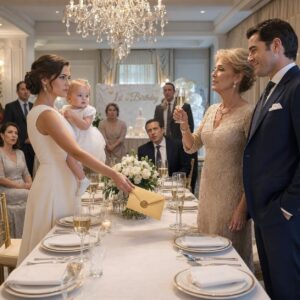
At My Brother’s Wedding, They Gave Me A Paper Badge That Said, “Limited Access Guest.” My Mom Leaned In And Said, “That Means No Dinner Plate.” I Looked Over, Walked To The Gift Table, Retrieved My…. My name is Connie Hst, and I was thirty-two years old when my family decided I didn’t merit a seat at my own brother’s wedding. At first, nothing seemed off. The ceremony was smooth and efficient, the kind that blends into soft piano notes and polite applause. Ryan stood confidently at the altar, exactly how he always liked to be seen—steady, admired, dependable. Cara looked radiant in a way that almost made you forget weddings are stitched together with tension, budgets, and quiet disagreements over table settings. Ryan barely spoke to me that morning, but I told myself it was nerves. Weddings can make people distant. I wasn’t expecting the spotlight. I didn’t need to stand beside him or deliver a speech or be introduced like someone important. I simply assumed I was included. Family usually is. After the ceremony, everyone drifted toward the reception hall, laughing, posing for photos, trading compliments like party favors. The venue was bright with tall windows and flowing white curtains that softened the evening light. Outside, the sunset pooled over the pavement like liquid gold. I joined the check-in line behind a couple dressed in matching beige tones. The attendant smiled warmly at them and handed each a thick badge edged in gold. Their names were written in elegant script, table numbers listed beneath. Then it was my turn. She didn’t meet my eyes. She reached under the table and handed me a thin paper badge. No ribbon. No flourish. Just bold black lettering printed across it. Limited Access Guest. I stared at it, waiting for a correction. A laugh. A simple, “Oops, wrong one.” Maybe someone would fix it. Nothing. She was already assisting the next person. A tight pressure filled my ears, like I’d slipped underwater. I was about to ask if there’d been a mistake when my mother appeared beside me, almost as if she’d anticipated the moment. She leaned close, voice light and conversational. “That just means no dinner plate.” She said it casually. No apology. No discomfort. As though she were pointing out the coat check. Then she walked away. I stood there holding the badge, the flimsy paper bending under my grip. For a moment, I tried to rationalize it. Weddings are chaotic. Lists change. Someone forgets to update seating. Maybe it was an oversight. So I stepped inside anyway. The aroma hit me first—warm butter, roasted meat, hints of sugar waiting for dessert. Servers glided through the room with practiced ease, balancing trays like extensions of their hands. Tables shimmered under soft lighting. Real china sat at every place setting. Linen napkins folded neatly. Place cards upright, names written in careful calligraphy. I checked the nearest table. Then the next. Then the long family table at the front with the grander centerpiece. My parents’ names were there. Ryan and Cara. Her parents. Cousins. Friends. Not mine. I searched again, slower this time, my pulse climbing with every glance. I even checked the edges where extra chairs usually linger, where a last-minute guest might be squeezed in. Nothing. No chair. No plate. No awkward corner space. That’s when it settled in. I wasn’t forgotten. I was intentionally excluded. I looked toward the gift table. And that’s when I made a decision that would change the rest of the evening. Continued in the first c0mment ⬇️💬

Limited Access Guest Part One: The Badge My name is Connie Hart, and I was thirty-two years old when my family decided I didn’t deserve a chair…

I honestly thought my brother was joking when he pointed toward the back of the ballroom and said, “You’re not really on theme. Just sit at the kids’ table — and don’t talk to my boss.” Ten minutes later, his billionaire CEO walked past every VIP in the room, dragged a tiny chair up beside me, and said, “There you are. I’ve been trying to find you.” By sunrise, my brother’s flawless wedding, his job at Nebula, and our carefully balanced family hierarchy would be unraveling. My name is Lena. I’m twenty-eight. And last Saturday, my older brother publicly demoted me to the children’s table at his wedding. It wasn’t even the seating that hurt. It was how effortless it was for him. The ballroom looked unreal — crystal chandeliers dripping light, ivory linens layered over gold-trimmed china, towering floral arrangements that probably had their own budget line. A string quartet played something soft and expensive while servers glided between tables offering champagne. I had followed instructions precisely. I wore the pale blue dress Caleb had sent me a screenshot of with the message: “This one. No experiments.” I paid too much for my hair to fall in glossy waves instead of its usual rushed knot. I bought the exact registry item he’d “suggested” — an espresso machine that cost more than my laptop. I even arrived early, because apparently timing is part of optics. I was standing near the entrance, adjusting heels clearly designed by someone who hates feet, when I saw him. Caleb. Three years older. A lifetime ahead in self-importance. He moved through the room in his tuxedo like he was unveiling a brand, not celebrating a marriage. His posture screamed confidence. His smile was calibrated. When he spotted me, his expression tightened. He didn’t hug me. He didn’t say hello. He stepped directly in front of me and lowered his voice. “What are you doing here?” he asked. I blinked. “Attending your wedding?” “I meant here,” he said, gesturing toward the entrance. “This is where the key guests are arriving. Investors. Executives. Board members. You’re… in the frame.” “In the frame?” “Yes,” he said briskly. “Photographers are capturing arrival shots. We don’t need distractions.” I looked down at myself — the dress he chose, the neutral heels, the understated makeup. “I’m your sister,” I said quietly. “Which is why I relocated you,” he replied smoothly, pulling out the seating chart like it was a strategy document. “Table Five is now for the VP of Marketing. Her husband runs a fund. It’s strategic.” His finger slid down to the bottom corner. Table Nineteen. Near the service doors. With a balloon sticker. “That’s the kids’ table,” I said. “It’s mixed seating,” he corrected. “Great Aunt Marge is there. She won’t mind.” “You’re seating me with toddlers.” “You don’t match the room, Lena,” he snapped. “This is a high-level environment. You’re… freelance. It’ll be less awkward for everyone if you just sit, eat, and keep things low-profile.” “I have a career,” I started. He waved it off. “Your blog-writing thing isn’t exactly corporate. Just stay at Table Nineteen. And if you see Silas Vance — don’t approach him. He’s my CEO. This is important.” Then, leaning closer, he added, “Don’t make it weird.” He walked away before I could respond, already smiling at a cluster of men in tailored suits. He had no idea. The man he’d warned me about — Silas Vance, founder of Nebula, tech icon, keynote regular at global summits — was my client. The viral speech he’d delivered at the UN the week before? Drafted on my laptop at 2:00 a.m. while I sat cross-legged on my couch eating leftover noodles. To Caleb, I was just his awkward sister who “typed for a living.” He didn’t know I was the ghost behind the words his boss was praised for. I exhaled slowly. “Fine,” I murmured. “Table Nineteen it is.” The kids’ table was exactly what it sounded like. Positioned beside the swinging kitchen doors, close enough to feel waves of garlic-scented heat every time they opened. Instead of centerpieces, there was a plastic container of crayons. The tablecloth already featured colorful scribbles. A booster seat was strapped to one chair. Four boys in miniature tuxedos debated trucks. A baby fussed in a stroller. Great Aunt Marge slept upright. I stood there for a second. Then a little boy with a crooked bow tie looked up at me. “I like your dress,” he announced. “Thanks,” I said, smiling despite myself. “I like monster trucks,” he added. “Excellent taste,” I replied. The nanny beside him gave me a knowing look. “They stick you back here too?” “Apparently I’m off-brand,” I said. She laughed. “Their loss.” So I leaned into it. I poured apple juice, wrestled with impossible ketchup packets, drew dragons on napkins. I watched the “power section” from across the room like it was theater. Caleb floated from table to table, shaking hands, clapping backs, performing success. He was calculating status the way some people calculate calories. He’d been doing it his whole life. Then the room shifted. A ripple of attention moved from the entrance inward. Silas Vance had arrived. The air changed — conversations lowered, shoulders straightened, laughter sharpened. Silas greeted investors politely, nodded at board members… and then his eyes scanned the room. Past the front tables. Past the dance floor. All the way to the back. To Table Nineteen. He changed direction. Walked past every VIP. Stopped beside me. And without hesitation, pulled a tiny child-sized chair out from under the table and sat down next to me. “I’ve been looking everywhere for you,” he said warmly. The entire ballroom froze. Across the room, my brother went pale. And I smiled. Because I suddenly understood something Caleb never would. Power doesn’t always sit at the front of the room. Sometimes, it’s drawing dragons at the kids’ table. Let’s read what happened next to my very confident older brother 👇

The Kids’ Table My brother’s wedding was supposed to be the kind of event people talked about for months—the kind that ended up in glossy lifestyle magazines…

My father lifted his glass at Thanksgiving and smiled while he called me “the maid” in front of 14 guests, but when my little girl asked if that meant her mother was something to be ashamed of, the only man at the table who did not laugh was the guest my parents were desperate to impress—because he already knew exactly who I was, and he knew my father had just made a catastrophic mistake. My name is Sadie Holt. I am thirty-one, a single mother, and for six years my family has had one favorite joke. My sister Clare is the doctor. I am the maid. It started after my ex-husband emptied our checking account and vanished while our daughter was still in pull-ups. I came back to Ivy, Virginia, with two suitcases, a diaper bag, and a two-year-old on my hip, and my father allowed me to stay in the small guest house behind their property like he was doing charity for a stranger. I started cleaning houses because I needed money quickly. Eighteen dollars an hour. Bathrooms, kitchens, laundry rooms, whatever people needed. I scrubbed floors while Mia napped at a neighbor’s house and told myself it was temporary. My father never let me forget it. Every holiday, every dinner, every chance he got, he found some polished little way to remind people that Clare wore a white coat and I wore rubber gloves. When Clare finished her residency, my parents threw a dinner party. I showed up straight from a job, still smelling faintly of bleach, and my father smiled at the table and said, “Sorry Sadie’s late. She was busy scrubbing somebody’s bathtub.” That was how it always went. What nobody cared enough to notice was that I had stopped thinking like a cleaner a long time ago. I started thinking like an owner. The houses I cleaned belonged to people from D.C., Richmond, Atlanta. Big second homes sitting empty most of the year. They did not just need floors mopped. They needed landscapers scheduled, pipes checked, guest turnovers handled, contractors met, alarm systems monitored, everything. So while Mia slept at night in that tiny guest house, I built something. I registered an LLC, made a website on a dying laptop, and began signing contracts. Small ones at first. Then larger ones. A property here. An estate there. One client told another. Then another. By the time my father was still introducing me as “Sadie” and Clare as “Dr. Clare Holt,” I was running Blue Haven Property Group with sixteen employees and contracts across the Shenandoah Valley. My parents never asked what Blue Haven did. They never came to my office. They never once cared enough to look. Then my father began chasing a land deal with Langford Development Group. He wanted it badly. Too badly. Enough to start pressuring me to leave the guest house because the land had become “valuable.” Enough to serve his best bourbon and polish the silver for Thanksgiving because Victor Langford himself was coming to dinner. The funny part was, Victor Langford already knew me. He was one of my biggest clients. Every Tuesday morning, we talked about staffing, maintenance schedules, vendor delays, expansion plans. He trusted me with multimillion-dollar properties, and my father had no idea. Thanksgiving morning, I still cooked the meal. Of course I did. Turkey, sweet potatoes, green beans, the whole Virginia spread, while Clare got dressed and my mother floated around adjusting candles like she was preparing a magazine shoot. By noon, fourteen people had filled the house. Then Victor and his wife walked in, and my father practically rushed to the door to greet them. My mother introduced me with a smile so thin it could cut glass. “That’s Sadie,” she said. “She helps with cleaning.” Victor looked at me. Just for one second too long. Dinner started. Wine was poured. My father stood at the head of the table and did what he always does when he has an audience. He lifted his glass and said, “I’m thankful for my daughter, Dr. Clare Holt, who continues to make us proud.” Everyone smiled. Clare stared down at her plate. Then he turned toward me. “And of course, Sadie. One daughter is a doctor. The other is the maid.” He laughed. A few guests laughed with him. A few looked down. My mother did not correct him. She never does. Beside me, Mia tugged on my sleeve. Her voice was tiny. Confused. “Mommy… is being a maid a bad thing?” The whole table went quiet. Not one person moved. Not one person laughed that time. I looked at my daughter first. Then at my father. Then at the one man at that table who had gone completely still. Victor Langford was already staring at me like the pieces were finally sliding into place. And suddenly, after six years of swallowing it, after all the little speeches and all the quiet humiliation and all the holidays where I let them define me because keeping the peace felt easier, I realized I was done. I pushed back my chair. Took Mia’s hand. And walked straight to the guest my father had wanted most to impress. “Hello, sir,” I said. “Maybe you should tell them who I really am.” (I know you’re curious about the next part, so please be patient and read on in the comments below. Thank you for your understanding of the inconvenience. please leave a ‘YES’ comment below and give us a “Like ” to get full story ) 👇

My father raised his glass at Thanksgiving and smiled while he called me the maid in front of fourteen guests. He said it like it was a…

My parents threw me out into a storm at fifteen because they believed my sister’s lie, and three hours later, the police called them to the hospital, but the part none of them were prepared for came thirteen years later, when my sister sat in her graduation gown expecting applause, my parents took their seats feeling proud and certain, and I walked onto the stage with my name printed in the program they had not bothered to read. “Get out. I don’t need a sick daughter like you.” My father said it in the middle of a storm, like he was tossing out a broken appliance instead of his own child. I was fifteen, trembling so hard I could barely pull my jacket closed, standing in our front hallway while my sister cried against my mother’s shoulder and pretended she was afraid of me. That was how it always worked in our house. Khloe cried, and the whole room leaned toward her. I brought home straight A’s, science awards, scholarships, and they landed with a polite smile before disappearing beneath the weight of whatever emotional crisis my sister had created that week. By fifteen, she had learned exactly how to use that. A fake screenshot. A bruise I never gave her. A shaking voice. One story about me spreading rumors and trying to steal the boy she liked. That was all it took. My father never asked for proof. My mother never asked me a second time. They just looked at me like something had finally been confirmed. Something is wrong with you, Julia. You’re sick. Then the door opened, and I was out in the rain. I still remember the sound of it hitting the sidewalk. Hard, endless, cold enough to make my teeth chatter within minutes. I kept walking because I had nowhere else to go and because turning back would have meant knocking on that door and begging people who had already chosen not to believe me. I never reached the bus station. The car hit me in an intersection I could barely see through the rain. One second there were headlights, the next there was pavement, blood in my mouth, and a woman kneeling beside me in the storm, holding my shoulder and telling me to stay awake. She asked for my parents’ number. I tried to answer, but what came out instead was, “They don’t want me.” That woman was Dr. Rebecca Lawson. At the time, I only knew her as the guest lecturer who had visited my biology class a week earlier and told me not to let anyone make me doubt my mind. That night, she was the one who stayed at the hospital. The one who did not leave when the police arrived. The one who looked at my parents and asked why their fifteen-year-old daughter had been outside alone in a storm. She was also the one who told the social worker I did not have to go back. That decision changed my life. I finished high school in Ohio. Went to college. Built the kind of future I used to dream about quietly because dreaming too loudly in my parents’ house always felt dangerous. I studied education policy, then created a scholarship program for students who had been pushed out, ignored, or left behind. Kids who only needed one adult to believe them. I named it Second Chances. By twenty-eight, I was running a program that had already helped dozens of students stay in school. Universities invited me to speak. Foundations returned my calls. People used words like impact and leadership when they described my work. My parents knew none of it. As far as I could tell, in their version of the world, I had simply disappeared. Then an invitation landed on my desk. Riverside State University. Keynote speaker for spring graduation. My stomach turned the moment I read the name because Riverside was Khloe’s school. I could have said no. I almost did. But there are some doors life opens only once, and I had spent too many years being the girl who got pushed outside. So I said yes. The morning of the ceremony, I stood backstage in a navy suit with Rebecca in the front row and the program folded in my hand. I had already seen Khloe’s name listed under communications. I knew she was out there. I knew my parents were too. Proud, polished, ready to clap for the daughter they kept. President Walsh stepped to the podium first. Opening remarks. Smiles. Applause. Then he said my name. “Please welcome Ms. Julia Ford.” I walked into the light. Khloe was in the third row, smiling at something her friend had whispered. She started clapping without really looking up. Then she did. Her hands stopped. The color drained from her face so quickly it looked like someone had pulled it out of her. A few rows behind her, my father leaned forward, confused at first, then frozen. My mother’s hand moved to her chest. Neither of them moved. Neither of them looked away. I reached the podium, adjusted the microphone, looked straight at the graduating class, and said. (I know you’re curious about the next part, so please be patient and read on in the comments below. Thank you for your understanding of the inconvenience. please leave a ‘YES’ comment below and give us a “Like ” to get full story ) 👇

My parents threw me out into a storm at fifteen because they believed my sister’s lie. Three hours later, a police officer called them to the hospital….

“At my daughter’s first birthday, my mother-in-law raised her glass and asked why the baby had blue eyes if she was truly her son’s child, and my husband actually smirked and said maybe I had a secret—so I stood up, reached into my purse, and placed one sealed envelope in front of the woman who believed she had just destroyed me.” My name is Skyler Carile. I am thirty-two, and I will never forget the sound of people laughing while my daughter began crying in my arms. It was her first birthday. Twenty-five relatives. Crystal centerpieces. A ballroom glowing in gold. My little girl, Arya, in a white dress with one tiny curl falling over her forehead, far too young to understand why the room suddenly felt sharp. From the outside, it looked like a beautiful family celebration in Westchester County. Inside, it was an ambush. My mother-in-law, Victoria, had spent years making it clear that I was never the woman she wanted for Logan. There was always another woman in the story. Chloe Bennett. Polished, wealthy, approved. The one Victoria brought up at every holiday, every dinner, every moment she wanted to remind me I was not enough. At Thanksgiving, Chloe’s real estate deals were mentioned before the turkey reached the table. At Christmas, Victoria praised Chloe’s charity gala while looking at me like I was something temporary. Even after I gave birth, exhausted and still healing, she found a way to compare my body, my clothes, my life, to the woman she wished her son had married. And Logan? He never stopped her. He always used the same line. Don’t take it personally. Mom just has high standards. Then Arya was born, and instead of improving, everything grew colder. He started staying late at work. Started looking at me differently. Started saying little things that did not sound like him until I realized they did sound like someone else. Then one afternoon, I picked up his phone to call the pediatrician and saw the messages. My mother-in-law asking where the baby’s blue eyes came from. Telling him Chloe would never put him in this position. Telling him to think carefully. That was the first crack. The second came when Logan left his laptop open on the kitchen counter and I saw an email thread that made my whole body turn cold. A plan. Actual phases. Create doubt about the baby. Increase contact with Chloe. Use the birthday party for a public accusation. File for divorce after humiliation did the heavy lifting. There was even money attached to it. A fresh start, they called it. That was three months before the party. So while they thought I was smiling and surviving, I was preparing. By the time Arya’s birthday arrived, I had the test results, the screenshots, the legal paperwork, and more than enough truth to bury every lie they had built. Victoria arrived late that night, of course she did, dressed like she was entering a performance. Chloe came in beside her in red. Logan pulled out Chloe’s chair with a smile I had not seen in months. I sat at the far end of the table with my daughter. Then Victoria stood and tapped her glass. She looked at Arya like my child was proof. “Just look at those blue eyes,” she said. “Five generations of brown eyes in the Carile family, and suddenly this.” The room went quiet. Then came the whispers. Then Logan stood, rested his hand on Chloe’s shoulder, and smiled like he had been waiting for his line. “Maybe,” he said, “there’s more to the story.” People laughed. Actually laughed. My daughter startled in my arms and reached for me while the room looked at me like I was the scandal they had all been promised. Victoria stepped closer and asked who the real father was. That was the moment they believed I would break. Instead, I kissed Arya’s forehead, adjusted her against my shoulder, and smiled. A real smile. Then I reached into my purse, pulled out the envelope I had carried for three months, walked it straight across that silent room, and placed it in front of my mother-in-law. Her face changed the second she saw it. I looked her right in the eye and said, “If we’re talking about secrets… open this.” (I know you’re curious about the next part, so please be patient and read on in the comments below. Thank you for your understanding of the inconvenience. please leave a ‘YES’ comment below and give us a “Like ” to get full story ) 👇

My name is Skyler Carile. I am thirty-two years old. And I will never forget the sound of people laughing while my daughter started to cry in…

My husband texted me that he was trapped at work, while kissing his pregnant mistress two tables away from me. I was about to smash a wine glass in his face, until a stranger whispered that the worst part was only just beginning. My phone vibrated against the white tablecloth. “Happy second anniversary, baby,” his message said. I looked up, and Alex had his hand on the back of another woman’s neck. The restaurant was full. Dim lights. Expensive wine glasses. Waiters moving past as if the world was not splitting in half. I had reserved that table on the Upper East Side a week earlier. New dress. Painful heels. My ring freshly cleaned, shining like a cruel joke. And my sea bass untouched, cold, sitting in front of me. Alex had promised he would be there at eight. At quarter past nine, he sent the text. “I’m stuck at work. Happy second anniversary, baby.” For one second, I wanted to believe him. I truly did. But then I saw him. Two tables away. In the side booth. Wearing the shirt I had ironed for him that morning. With the smile he barely gave me anymore. With his hand tangled in the blonde hair of a woman I did not know. And he was kissing her slowly. No hurry. No guilt. As if I did not exist. As if two years of marriage were just forgotten paperwork shoved into a city hall drawer. I looked down at my wine glass. My fingers gripped it so tightly the crystal creaked. I wanted to stand up. I wanted to scream his name. I wanted everyone in that restaurant to see the perfect LinkedIn man, the ideal Instagram husband, the liar sending me heart emojis while kissing another mouth. Then I noticed something else. The woman pulled back a little. She adjusted her dress. And Alex lowered his hand to her belly. A small bump. Round. Protected. Pregnant. I felt the air leave my lungs. It was not only cheating. It was a whole life happening right in front of me without ever asking my permission. I had barely stood up. The glass was already in my hand. And a voice stopped me from behind. “Stay calm… the real show is about to begin.” I froze. I turned slowly. At the next table sat a man in a gray suit, with a neatly trimmed beard and silver at his temples. He was not looking at me with pity. That was what scared me most. He looked at me like someone who already knew my tragedy before I did. “Who are you?” I whispered. He slid a card beside my plate. Nicholas Vance. No logo. No job title. Nothing else. “Someone who knows that kiss isn’t the worst thing Alex has done tonight.” My stomach twisted into knots. “What do you mean?” Nicholas did not answer immediately. He looked toward the booth. Alex was laughing. The pregnant woman stroked his tie. He kissed her fingers. With the tenderness I had been begging for for months. “Don’t make a scene yet,” Nicholas said. “Look toward the entrance in thirty seconds.” I wanted to ignore him. I wanted to walk up to Alex and smash his lie right into his mouth. But something in that man’s voice kept me fixed to my chair. I started counting without meaning to. Twenty. Twenty-one. My hands were shaking. Twenty-two. Alex pulled a small black box from his suit jacket. Twenty-three. The blonde woman covered her mouth, thrilled. Twenty-four. He dropped down on one knee. On our anniversary. Right in front of me. Twenty-five. Some tables began clapping. Twenty-six. I felt like I was dying from humiliation. Twenty-seven. Nicholas murmured: “Now.” Twenty-eight. The restaurant door opened. Twenty-nine. Two uniformed officers walked in. Thirty. And behind them appeared a woman in a black suit, holding a folder, walking straight toward Alex. The music faded. The clapping died. Alex saw her and went pale. Not the pale of a cheater who had been caught. The pale of a ruined man. The woman opened the folder in front of everyone. And before saying a single word, she placed a document on the table with my name written in red…(I know you’re curious about the next part, so please be patient and read on in the comments below. Thank you for your understanding of the inconvenience. please leave a ‘YES’ comment below and give us a “Like ” to get full story ) 👇

My phone vibrated on the white tablecloth. Happy second anniversary, baby. His message read 8:47 p.m. I’m stuck at work. Miss you. I looked up from the…

MY 4-YEAR-OLD POINTED AT MY BEST FRIEND AND GIGGLED, “DAD’S THERE” — I LAUGHED UNTIL I SAW WHAT HE WAS POINTING AT. We were celebrating my husband’s 40th birthday in our backyard. His parents were there. Our friends. Family. Far more people than I could realistically manage. I was rushing around nonstop — refilling drinks, carrying out snacks, making sure the kids had enough sugar and did not destroy anything, all while trying to keep conversations going. Our 4-year-old son, Will, was crawling under the tables with the other kids, laughing like crazy. His knees were stained green from the grass. At one point, I noticed his hands. Filthy. I pulled him out and took him inside to wash up. I was about to bring out the cake — I wanted him clean before that. But in the bathroom, he would not stop laughing. “What’s so funny?” I asked. He grinned. “Aunt Ellie has dad,” he said. Ellie — my best friend since childhood. We grew up together. She is like a sister to me. I paused. “Aunt Ellie?” I repeated. He nodded, completely proud of himself. “I saw it when I was playing.” My stomach tightened. “What did you see, Will?” “Come. I’ll show you.” He grabbed my hand and pulled me back outside. The party was loud. People talking, music playing, glasses clinking. Will pointed straight at Ellie. “Mom,” he said, loud and proud. “Dad’s there.” Ellie laughed. I laughed too. But he did not. He kept pointing. Insisting. And then I followed his finger. Not to her face. Lower. And the second I understood what he was pointing at— I felt my entire body go stiff. “Ellie,” I said, forcing a smile. “Can you come inside with me for a second?” (I know you’re curious about the next part, so please be patient and read on in the comments below. Thank you for your understanding of the inconvenience. please leave a ‘YES’ comment below and give us a “Like ” to get full story ) 👇

Hosting my husband’s 40th birthday party in our backyard seemed like a great idea right up until I was standing in the middle of it with a…

My stepsister slapped me at her wedding, and then her groom said my full name. At my stepsister’s 500-guest wedding, the same family who threw me out at sixteen let me stand at the back of the ballroom like I wasn’t even blood. The slap hit so hard it turned my face toward the champagne tower. For a bright second, all I saw was chandelier light, mirrored glass, and five hundred guests staring like the bride had just given them better entertainment than the band. My cheek burned. Someone gasped. Someone laughed. Then the laughter spread. Bianca stood in front of me in a fitted white gown, her hand still half raised. “You don’t belong here.” I didn’t touch my face. I didn’t step back. I didn’t react the way she wanted. If I had cried, she would have relaxed. If I had shouted, she would have understood the script. But silence exposes people, and Bianca had always hated that. Around us, the room slowed. The quartet stopped. A waiter lowered his tray. Conversations died mid-sentence. Then Bianca smiled and said louder, “Look at you. Still lingering at the edges like you belong with people like us.” A few guests laughed automatically. That was the worst part. Most people don’t need much encouragement to join public cruelty. They just need to believe someone else has already judged. I had been in the ballroom less than an hour—long enough to see Diane in icy blue chiffon, my father laughing with men who mattered to him, and Bianca glowing in the kind of attention she believed she deserved. I should never have come. The invitation arrived three months earlier on heavy cream paper with Bianca’s name beside Julian Mercer’s. No note. No apology. No mention that this same family had thrown me out at sixteen. I knew what it was. Optics. My mother died when I was fifteen. By Christmas, my father was with Diane. Within a year, Diane and Bianca were living in our house while I was slowly erased from it. If something broke, Bianca blamed me. If she cried, adults believed her before I spoke. Then came the dinner that ended everything. Rain on the windows. Pot roast on the table. Bianca stood beside a cream dress stained with red wine, looking at me as she said I ruined it. I said I hadn’t touched it. Bianca cried harder. Diane went quiet. My father barely looked up before telling me to leave. I packed a duffel bag, walked into the rain with a broken umbrella, and waited at the end of the driveway for my father to come after me. He never did. So no, Bianca trying to make me feel small in a ballroom wasn’t new. It was just the most expensive version of it. She studied me. “What did you think this was? A charity invitation?” The nearest guests went quiet, eager to watch. I said nothing. Her smile sharpened. “Did you come hoping someone would mistake you for family?” There it was. Clean, public humiliation. The truth was worse. I hadn’t come to be mistaken for family. I came to see if time had changed them. If they had become the kind of people who could behave. They hadn’t. Bianca stepped closer. I could smell champagne and perfume. “You always knew how to show up when there was something to take.” That line was old. To her, my existence had always been theft. Julian Mercer had noticed me earlier. I saw the moment recognition crossed his face—surprise, then focus, then something harder. My cheek still burned as Bianca gestured to the room. “This is my wedding. You’re not going to stand here pretending you belong.” Then she slapped me again. Not wildly. Clean. Loud enough for nearby tables to hear. That’s when I remembered something simple: humiliation has a smell. Champagne and perfume turning sour while strangers enjoy your pain because the bride made it acceptable. I still didn’t move. Bianca’s hand dropped. She looked almost confused now. She expected tears. Rage. The old version of me. She didn’t know that girl was gone. Then a man’s voice cut through the room. “Do you even know who she is?” Everything stopped. Bianca turned first. I turned slowly, already feeling the room shift. Julian stood behind her, one hand on a chair, his expression nothing like before. A murmur spread as he stepped forward and said, “Miss Vance.” Bianca laughed, but it sounded thin. “What are you doing?” Julian ignored her. “Miss Vance,” he repeated, this time with certainty. Recognition. My cheek still burned, and beneath the music, I could still hear another voice from another house telling me to leave. So I stayed silent. Julian looked at Bianca. “Do you have any idea what you just did?” “What are you talking about?” she snapped. “She’s my stepsister.” “No,” he said. “That is not who she is.” Now the room listened differently. Not amused. Calculating. Bianca looked between us, trying to force the moment back into her version of reality. “Julian,” she said, and now there was fear. He didn’t look away. “The woman you just slapped,” he said, each word heavier than the last, “is—”..Full version below..….

For a brief second all I saw was light. Gold from the chandeliers, silver from the mirrored wall behind the bar, the glitter of five hundred glasses…

My stepfather raised five children who were not his — and after his funeral, each of us received a letter that had never been meant for the others to read. My mom married Thomas when I was five. I was not his daughter. Not by blood. But two years later, when my mother died suddenly, everyone expected him to send me to my grandparents. He did not. He packed my lunch, learned how to braid my hair from a library book, and told anyone who asked, “She’s my daughter.” When I was nine, he adopted two children from a shelter — twins, a boy and a girl, both seven. Michael and Mara. Two years after that, he became a foster father to another brother and sister: Noah, seven, and Susan, five. After a few years, he officially adopted them too. Just like that, our small house became noisy, crowded, messy, and full. None of us came from the same beginning, but Thomas made us feel like we belonged to the same home. He worked two jobs through most of my childhood. He packed our school bags at midnight and never once let us hear him complain. By the time he had his heart attack at fifty-six, all of us were grown. I had a job. Michael had a wife. Mara lived three states away. Noah had two children of his own. And Susan… Susan left the week she turned eighteen. She never explained why. She stopped answering Thomas’s calls, sent his birthday cards back unopened, and told me once, “You don’t know him the way I do.” Still, she came to the funeral. She stood near the back in a black coat, pale and silent. After the service, Thomas’s lawyer asked all five of us to come to his office. On the desk was a locked wooden box. Inside were five envelopes. One for each of us. Mine had my name written in Thomas’s shaky handwriting. I opened it with trembling hands. My stomach tightened as I read the first line. “My sweet girl, Susan left because she discovered something about me the rest of you never knew.” (I know you’re curious about the next part, so please be patient and read on in the comments below. Thank you for your understanding of the inconvenience. please leave a ‘YES’ comment below and give us a “Like ” to get full story ) 👇

The rain started just before they lowered Thomas’s casket, which felt like something he would have found mildly inconvenient and faintly funny. He was that kind of…

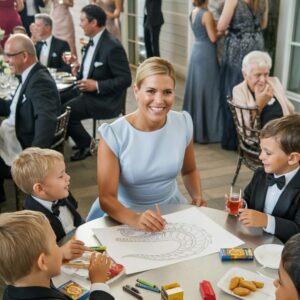
I went to my second home to prepare it for renters and found my daughter-in-law’s parents staying there with 3 relatives. They laughed: “Our daughter allowed it. This house will be hers someday anyway.” I went to my second home in a mountain lake region to get it ready for a long-term tenant, and instead I found my daughter-in-law’s parents inside like they already felt completely at home there. They were drinking my wine. Eating around my old cherry wood coffee table. Laughing with three relatives in the living room I had kept spotless for years. Then Brenda, my daughter-in-law Sarah’s mother, looked directly at me and smiled. “Sarah told us we could stay. This house will be hers someday anyway.” That one sentence told me everything. Not because it was the first time Sarah had acted entitled to something of mine. It wasn’t. But it was the first time her family said the quiet part out loud while sitting on my furniture, holding my glassware, and treating my home like a vacation place they had grown comfortable using. My name is Diane. I was 68 years old then, and that cabin was not some forgotten little house sitting empty for anyone to enjoy. It was part of my retirement plan. I had driven up there that morning with a spare key in my hand and a simple plan in my mind. I was supposed to meet the realtor, walk through the place, and prepare it for tenants. The rental income was going to help me protect the years I had left without needing to ask my son for anything. But when I unlocked the door, I did not hear silence. I heard laughter. Glasses clinking. Music from the living room. For one second, I thought maybe I had walked into the wrong house, because people who respect you do not settle into your property without asking. Then I saw Brenda and Larry, Sarah’s parents, relaxing there with three cousins. Pizza boxes were spread across the table that had been in my family for generations. My best bottle of wine was open. The kitchen sink was full. Crumbs were everywhere. Brenda did not even stand up. “Diane, what are you doing here?” she said, like I was the one interrupting. I looked around that room and felt something colder than anger. Disappointment. Because my son Jason knew what that cabin meant to me. He knew I was counting on the rental income. He knew I had worked, saved, and planned carefully so I would not become dependent on anyone in old age. But Jason had spent years avoiding conflict by treating my generosity like something available to everyone around him. Some families do not take everything all at once. They begin by acting shocked when you finally set boundaries. Brenda followed me into the kitchen with a glass of my wine in her hand. “Don’t get upset,” she said. “Sarah said the house is basically going to be hers and Jason’s eventually anyway. We’re just enjoying some family time here.” That was the moment I stopped seeing her as an awkward in-law and started seeing the truth. They were not simply visiting. They were getting far too comfortable. And they expected me to smile through it. For years, Sarah had mistaken my quiet for weakness. She managed Jason’s decisions, spoke over him at family dinners, and made little comments about my antiques as if she were already deciding what would stay and what would go. “That piece is a bit dated, Diane,” she would say, staring at my furniture like she was doing me a favor by tolerating it. I used to nod. I used to let things pass because I wanted peace. But peace that requires one person to quietly accept disrespect is not peace. It is avoidance. So I did not yell in that kitchen. I did not argue with Brenda. I did not explain basic ownership to grown adults who had already decided my silence meant permission. I walked out. Behind me, Brenda actually called after me and asked if I could take the trash out on my way. I drove back to a southern city with Jason’s name lighting up my phone again and again. Three calls. I let every one ring. By the time I reached my townhome, my hands were steady. I made tea. I sat at my desk. Then I opened my laptop and started reconsidering the kind of help they had all mistaken for obligation. First, I logged into the savings account I had set up for Jason and the grandkids. Sixty thousand dollars. It was meant to help with the down payment on their first house. Jason had access, but the money was mine. It had been a future gift, not something automatically guaranteed to them. I moved every cent back into my private account. Then I canceled the cleaning service at the cabin. If Brenda and her relatives wanted to stay there, they could manage their own mess. After that, I opened the utility portal. Electricity. Water. Gas. One by one, I stopped the automatic payments connected to that house. I was not being dramatic. I was being practical. My money, my bills, my property, my decisions. The next morning, Sarah arrived at my door without knocking. Her face was flushed, and she had the voice she used when she wanted people to feel guilty before they fully understood the conversation. “Diane, what on earth was that yesterday? My mother is devastated. You just walked out without saying a word. They feel completely unwelcome.” I kept watering my flowers. “They are unwelcome, Sarah. It’s my house.” She gave a short laugh. “We’re family. Jason and I agreed they could stay there. We thought you’d be happy the house was being used.” That was when I set the watering can down. “Jason has no right to offer my property to anyone else. And neither do you.” Her face changed just enough for me to know she had not expected that answer. Then she crossed her arms. “That house is going to be ours anyway. Why are you making such a big issue out of this?” I looked at her calmly. “Someday isn’t today. And whether it will ever be yours is still my decision.” That was the first time Sarah went quiet. Not because she was sorry. Because she was thinking carefully. Then she mentioned the savings account. Jason had seen the money was gone. They were supposed to sign for the new house the next week, she said, as if my decision to step back had suddenly created a problem. I pointed to the chair across from me. She stayed standing. “That money was a gift connected to trust,” I told her. “And trust goes both ways.” For once, Sarah had no quick answer. She was used to strong opinions winning. She was used to Jason giving in. She was used to me smoothing things over so everyone else could keep pretending the problem was my sensitivity instead of their behavior. But that morning, my kitchen stayed quiet. And by Sunday night, when I drove back up the mountain with a locksmith waiting in the gravel driveway, Brenda was still inside my cabin, still holding a glass of wine, still acting like I had come to discuss arrangements. She opened the door in a bathrobe and smirked. “Diane, back again. We told you we’re staying through the month.” I stepped inside, and the locksmith followed behind me. Brenda’s smile disappeared. The new deadbolt was already in his hand. (I know you’re curious about the next part, so please be patient and read on in the comments below. Thank you for your understanding of the inconvenience. please leave a ‘YES’ comment below and give us a “Like ” to get full story ) 👇

I went to my second home in the Blue Ridge Mountains to get it ready for a long-term rental and found my daughter-in-law’s family drinking my wine….