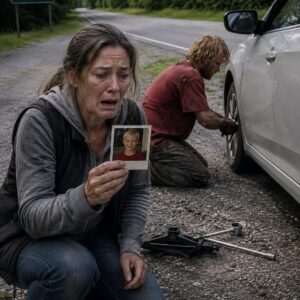
A homeless man helped me change a flat tire on Route 9, the same road where my son disappeared 20 years ago—what he left on my passenger seat brought me to my knees. I’m 50. My son Daniel vanished from a rest stop on that exact highway in 2006. He was 7. I was buying him a Sprite. I turned around, and he was gone. The police searched for six weeks. Then six months. Then the file was placed in a drawer and stayed there for twenty years. I stopped driving Route 9 after the first anniversary. I could not breathe on that road. But last Tuesday, my GPS rerouted me through it, and twenty miles in, my back tire blew. I was sitting on the shoulder, crying—not because of the tire, but because of everything—when a man in worn-out clothes came walking out of the trees. Tattered coat. Hands like leather. He did not say much—just nodded and started working on the tire like he had done it a thousand times. When he finished, he wiped his hands and looked at me with the saddest eyes I had ever seen. “You take care now, Margaret,” he said softly. I froze. I had never told him my name. Before I could speak, he turned and walked back into the pines. I got in my car, still trembling… and that was when I saw it. On the passenger seat. A faded Polaroid. 2006. A little boy in a red shirt, smiling at someone behind the camera. My son. A photo I had NEVER seen before in my life. And on the white border, in shaky handwriting, was AN ADDRESS. Only 40 miles away. I video-called the sheriff—the same man who closed Daniel’s case, now the mayor of our town. I showed him the Polaroid. His face turned white. Then he said something that made my stomach drop— “Margaret, whatever you do… DO NOT go to that address.” But it was too late. Because I was already there. And as I reached for the door— it creaked open from the inside. I dropped to my knees. I know many of you want the next part, so please wait a moment and check the comments below for the continuation. Thank you for your patience and understanding. Comment “YES” and give us a Like to receive the full story.)👇
I am fifty years old, and my life has been split in two since 2006. Before Daniel. After Daniel. Before, I was a mother driving down Route…
At my graduation, my father announced he was cutting me off. “You’re not my real daughter anyway.” The room gasped. I smiled, walked to the podium, and said, “Since we’re sharing DNA secrets.” I pulled out an envelope. His wife’s face turned white as I revealed… …because he chose the one moment I could not walk away from: cap on, tassel brushing my cheek, UC Berkeley still applauding while the Bay breeze shifted the banners above us. My name is Natalie Richards. I am 22, and I used to believe a diploma might finally make my father look at me like I mattered. He flew in from the Chicago suburbs at the last minute, sat four rows back in a dark suit that looked wrong in the sunlight, and watched me like I was a decision he could still undo. When my friends shouted my name, he clapped exactly three times. When strangers smiled and said, “You must be proud,” he nodded like he was approving a formality. Then the dean invited “a few words from family,” and my father stood. “I won’t be supporting her anymore,” he said, smooth as glass. “And she should stop telling people she’s a Richards. She’s not even my real daughter.” You could feel the air shift. People stared. Phones rose. My cheeks stayed dry, but my stomach dropped like an elevator. I looked at my mother. Because my mother—Diana—had spent my entire life softening his sharp edges, calling cruelty “stress,” treating silence like it was safer than the truth. In that moment, her hand froze on her purse strap, and her face went pale in a way I had only seen once before. When I was seventeen. That was the summer I stumbled across a truth that made our house feel staged. I did not understand every detail, but I understood enough to know my father’s love had always come with conditions—and that one day he would use those conditions like a weapon. So I built my own life anyway. Jobs, scholarships, and a small circle of people who showed up without needing to be begged. And one sealed envelope I saved for the day he decided to humiliate me in public. Standing on that stage, listening to him erase me with one sentence, I felt something inside me become quiet and steady. I walked to the podium, wrapped my fingers around the microphone, and let the silence stretch just long enough for him to feel it. “If we’re doing honesty today,” I said, calm, “then let’s do all of it.” My father’s jaw tightened. My brothers stared down at the floor. My mother did not blink. I reached into my gown and pulled out the envelope. Paper in the sunlight, the kind that changes what people believe they know. “For years,” I said, looking straight at him, “you’ve held one story over my head.” I turned the envelope so the front rows could see it, then let my eyes land on my mother’s face. Because she recognized it. Her lips parted like she was about to stop me, but no sound came out. I slid my thumb beneath the seal. And right before I pulled the page out—right before I said the name printed at the top—my father took one step toward the aisle like he might actually lose control in front of everyone. That was the first time I had ever seen fear flicker across his face. If you think you know what was inside that envelope, you are not even close. (I know you’re curious about the next part, so please be patient and read on in the comments below. Thank you for your understanding of the inconvenience. please leave a ‘YES’ comment below and give us a “Like ” to get full story ) 👇
My name is Natalie Richards. I am twenty-two years old, and I used to believe a diploma could finally make my father look at me like I…
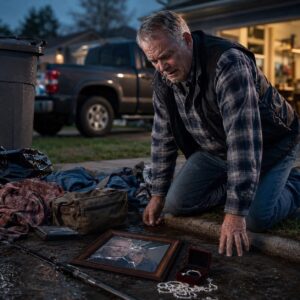
I Came Home From Three Quiet Days of Fishing to Find My Wedding Photo, My Late Wife’s Jewelry, and Every Piece of My Life Dumped Beside the Trash—Then My Son’s Wife Looked Me in the Eye and Said, “You’re Not Needed Here Anymore,” Like I Had Been Nothing but a Bill They Finally Finished Paying When I pulled into the driveway after three days at Lucky Peak, the first thing I noticed was a stack of boxes beside the dumpster. Not moving boxes. Not charity boxes. My boxes. The truck engine was still running when I saw Martha’s jewelry box lying in the dirt, half open, with her mother’s ring beside a crushed soda can. A moment later, I saw our wedding photo. Forty-two years old. The glass was cracked straight across her smile. I sat there with both hands on the steering wheel, staring as if maybe my eyes could find a kinder explanation than my brain already had. They couldn’t. My tackle box was broken open. My work shirts were soaked from the sprinkler. My Timex anniversary watch was face down in a puddle. Somebody had not simply packed up my life. Somebody had tossed it away. I walked to the front door and slipped my key into the lock. It stopped halfway. I tried again. Harder. Nothing. They had changed the locks. I called my son Floyd first. Straight to voicemail. Then Pamela. Same thing. I crossed the yard and knocked on my neighbor Simon’s door. He opened it just enough to look at me, then over my shoulder at the mess near the curb. “Simon, what happened?” He gave me that weak little shrug people use when they do not want to be caught knowing too much. “Didn’t really notice anything, Otis.” That told me everything. By the time Floyd and Pamela came home, I had been sitting beside my own belongings for four hours in a bent lawn chair I found near the pile. The sun had dropped low. The streetlights had come on. Nobody on that block had asked if I needed help. Pamela got out of the car first. No apology. No surprise. No shame. She looked at me, then at the boxes, then back at me like she was checking whether the garbage had been fully taken out. “Because you’re not needed here anymore, Otis.” I stood up slowly. “What are you talking about?” “The mortgage is paid off,” she said. “Your job here is done.” For a second, I honestly thought I had heard her wrong. Then Floyd stepped out from the passenger side and would not even look at me. That hurt worse than her voice. “This is my home,” I said. Pamela gave me a thin smile. “Lived here. Past tense.” I looked at my son. “Floyd?” He kept staring at the driveway. “Dad… it’s just not working anymore.” Not working. Eight years earlier, after Martha died, they had sat across from me at that same kitchen table and asked for help buying the house. Floyd’s credit was bad. Pamela was between jobs. They promised we would all live together. Said I would always have a place there. Said family should stay beneath one roof. So I helped. I signed what needed signing. I paid what needed paying. Mortgage. Utilities. Groceries. Repairs. When the furnace broke, I covered it. When Floyd fell behind, I covered that too. I kept telling myself I was not just helping them keep a house. I was helping us keep a family. Now I was standing in the street beside my late wife’s broken picture frame while my daughter-in-law spoke to me like I was an old appliance they had finally replaced. “Where am I supposed to go?” I asked. Pamela lifted the grocery bags from the trunk. “That’s not our problem.” Then she walked inside my house. My son followed her. And the door closed in my face. I stood there for a long time after that. Long enough for the hurt to cool and something harder to take its place. They thought I was finished because I was old. They thought I was helpless because I was quiet. They thought I had spent eight years paying bills with my eyes shut. That was their mistake. I loaded what mattered into my truck. Martha’s jewelry box. The photo. My tools. My folder of papers. Then I drove to a cheap motel off the highway, sat on the edge of a bed that smelled like bleach and old air-conditioning, and spread those papers beneath a yellow lamp. Every check stub. Every tax receipt. Every loan document from the day we bought that house. I had kept all of it. My hands were steady when I found the closing file. Steady when I flipped past the bank forms. Steady when I saw the signatures. Then I picked up my phone and made one call. The attorney who handled that house closing answered on the third ring. I gave him my name. I told him what had happened. I told him I needed one question answered right now. There was a pause while he pulled the file. Then he cleared his throat and said, very carefully, “Mr. Riley… before I answer that, I need to ask you something.” I tightened my grip on the phone. “Did your son and his wife ever actually read the deed?” (I know you’re curious about the next part, so please be patient and read on in the comments below. Thank you for your understanding of the inconvenience. please leave a ‘YES’ comment below and give us a “Like ” to get full story ) 👇
The first thing I noticed wasn’t the house. It was the pile. My pickup truck coughed to a stop in front of what used to feel like…
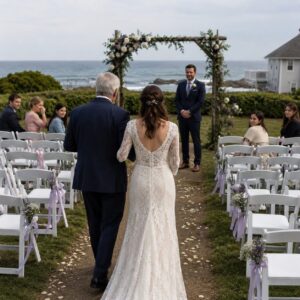
“My father promised he would walk me down the aisle, then vanished to my sister’s baby shower with the rest of my family, and by the time I walked through a garden full of empty chairs with our gray-haired landlord beside me, I had already stopped begging for people who only remembered I existed when they believed I had something they wanted.” “You can have a wedding anytime, Phoebe.” That was what my sister told me six weeks before my wedding, as if she were rescheduling brunch, not my life. Then she arranged her baby shower for the exact same day. Same date. Same hour. Same choice. And one by one, my family chose her. My mother. My aunts. My cousins. Even my father, who had held my hand and promised he would walk me down the aisle. I want to say I fought harder. I didn’t. I called. I asked. I gave them every chance to show me I mattered. What I received back was silence, vague excuses, and the kind of soft, careful voices people use when they have already chosen to disappoint you. My father worked at a bank in Hartford for most of his life. My mother kept a spotless colonial home in Glastonbury and cared deeply about appearances. My sister Brittany married rich five years ago, and from that moment on, the whole family began orbiting her like she was the sun. Her husband paid their mortgage. Bought my mother gifts. Covered dinners, vacations, little luxuries nobody wanted to lose. So when Brittany became pregnant and decided her shower mattered more than my wedding, nobody said no. I was the easier daughter to disappoint. I’m Phoebe. I’m the younger one. The illustrator. The one with paint on her sleeves and freelance checks that arrived unevenly. The one engaged to Ethan, a painter my family politely treated like a talented inconvenience. At Thanksgiving, my father looked directly at him over the turkey and asked when he planned to get a real job. Brittany laughed. Chad smirked. Ethan just reached under the table and squeezed my hand. That was Ethan. Quiet. Steady. Never loud enough for my family to understand him. We planned our wedding ourselves. A small garden ceremony near Mystic. Wildflowers. Handmade invitations. An arch Ethan built from salvaged wood. Nothing flashy. Nothing borrowed from anyone else’s money or approval. I loved every part of it. Maybe that was what bothered Brittany most. Three weeks before the wedding, my aunt accidentally let it slip. “Are you going to Brittany’s shower too,” she asked, “or just the wedding?” That was how I found out. When I called Brittany, she acted confused, sweet, innocent. She said the club only had that day available. She said maybe people could attend both. They couldn’t. She knew that. Then she said, in that syrupy voice she uses when she is being cruel on purpose, “This is my first baby, Phoebe. You can have a wedding anytime.” I called my mother. She asked whether I could postpone. I called my father. He said, “Let me see what I can do.” Three days later, I texted him: Are you still walking me down the aisle? He left me on read. The night before the wedding, I sent one final group text with the address, the time, and one line at the end: I hope to see you there. Not one person replied. The next morning, while my best friend Jessica was doing my makeup in the bathroom, my father called. I knew before I answered. “Phoebe,” he said, already sounding smaller than himself, “your mother and I don’t think we can make it to Mystic after the shower.” I stood there in my half-buttoned dress, mascara drying beneath my eyes, and listened to my father choose finger sandwiches and pink balloons over the moment he was supposed to place my hand into the hand of the man I loved. “You promised,” I said. “I know,” he answered. “But this is Brittany’s first baby. You’ll have other moments.” My voice did not shake. “This is my only wedding day.” Then I hung up. By the time we reached the garden, the chairs were already arranged. Forty-two white chairs with lavender tied to the backs. Thirty-five of them empty. I stood at the end of the aisle in a vintage lace dress from a consignment shop in Mystic and felt every empty seat like a hand pressed flat against my chest. Jessica offered to walk me down. I told her no. Then, just before the music started, I heard footsteps behind me. It was Arthur. Our landlord. Sixty-seven years old. Quiet. Always smelling faintly of coffee and old books. He was wearing a navy suit I had never seen before, and he held out his arm like it was the simplest thing in the world. “Your father should be here,” he said. “Since he isn’t, someone who values you should.” So I took his arm. Seven people watched me get married that afternoon. Seven. And somehow, it was still beautiful. That night, after the last pizza boxes had been cleared and the lavender had been brought home in jars, I opened Instagram and saw my sister’s post from the shower. My father was in the background smiling with one hand on her stomach. The caption said: Family is everything. I stared at it for a long time. Then I put my phone down and made myself a promise. I would never again beg people to love me correctly. The next morning, I posted one single honeymoon photo. Nothing dramatic. Just me, Ethan, blue water behind us, and one quiet caption. Within an hour, my phone lit up with 417 messages from the same family who could not send a single one on my wedding day…(I know you’re curious about the next part, so please be patient and read on in the comments below. Thank you for your understanding of the inconvenience. please leave a ‘YES’ comment below and give us a “Like ” to get full story ) 👇
“You can have a wedding anytime, Phoebe.” That’s what my sister said six weeks before I walked down the aisle in a garden full of empty chairs….
My Family Hid My Sister’s Tuscany Wedding Because My Tattoos, My Body, and My “Software Girl” Life Didn’t Match Their Perfect Photos — Two Years Later, My Own Wedding Guest List Went Public, and Suddenly My Mother Was Begging for the One Invitation She Thought She Could Demand My mother did not accidentally forget to invite me to my sister’s wedding. She made sure I disappeared. Not quietly. Not by mistake. Deliberately. Like someone pulling one wrong-colored thread from an expensive white dress before anyone important could notice it. My name is Valerie Harrison. I was twenty-six then, living in a downtown Chicago loft with exposed brick walls, two half-sleeves of floral tattoos, and a software company I had built from nothing. I earned more than most of the men my mother tried to impress at the country club. But that never mattered to her. To Brenda Harrison, my career was not elegant enough to brag about. I wrote code. I wore black jeans. I laughed too loudly. I took up space. I had curves she always described with that tight little smile, as if my body were a social inconvenience. My younger sister, Courtney, was different. Courtney was the golden daughter. Former pageant girl. Perfect hair. Perfect skin. Perfect smile. The kind of daughter my mother could place in front of wealthy people and watch them approve. So when Courtney got engaged to Preston Kensington, a man from an old-money Boston family, my mother practically floated off the ground. Within forty-eight hours, the wedding stopped being about love. It became a campaign. Every dress fitting, every flower, every wine glass, every napkin fold had one purpose. Impress the Kensingtons. Especially Preston’s mother, Margaret. I wanted to be happy for Courtney. I truly did. I sent champagne to her apartment with a handwritten note. I started searching for bridesmaid dresses online before anyone even asked me. I looked for conservative gowns with long sleeves, because I already knew what my mother would want. Cover the tattoos. Soften the edges. Make Valerie less Valerie. I was willing to do it. That is the part that still embarrasses me. I was willing to make myself smaller just to stand beside my sister for one day. But weeks passed. Then months. No call. No details. No dress appointment. No flight information. Whenever I asked my mother about dates, she sighed like I was being difficult. “Valerie, please don’t nag me. The logistics are very delicate. Just keep your autumn schedule open.” So I did. Because some daughters are not foolish. They are just hopeful in places they should have let die years earlier. Then, one rainy Tuesday afternoon, I saw the post. I was sitting at my desk, eating cold pizza between coding sprints, when a photo appeared on my feed from one of Courtney’s college friends. Five women laughing. Five engraved wooden boxes. Five champagne bottles. Five silk robes. Five bridesmaids. The caption said they were honored to stand beside Courtney in Tuscany. Tuscany. My own sister was getting married in Italy, and I had found out from Instagram like a stranger. I called Courtney. Voicemail. I called my mother. She answered like I had interrupted something expensive. “Valerie, I’m in the middle of a tasting. What is it?” I asked her why Courtney had already picked her bridesmaids. There was a pause. Not a shocked pause. A caught pause. Then my mother shifted into the cold voice she used when she had already decided my feelings were inconvenient. “The Kensingtons are funding most of the wedding,” she said. “It is a highly curated, intimate affair.” “I am her sister,” I whispered. “And you are loved,” she said. Loved. That word sounded almost insulting coming from her mouth. Then she said the sentence that finally cut through every excuse I had ever made for her. “Valerie, you stick out. Your tattoos, your weight, your whole alternative vibe. It just does not fit the aesthetic Margaret wants for the formal photographs.” For a second, I could not breathe. Not because I was surprised. Because some part of me had always known. I had spent my entire life being edited by my mother. But this was the first time she admitted I had been deleted. “You’re uninviting me from my only sister’s wedding because I don’t fit the pictures?” “Please don’t be dramatic,” she snapped. “We’ll do a quiet dinner when we get back. You can look at the album.” Then she hung up. A few days later, my father called and offered me $2,000 to “make up for the disappointment.” He asked me not to post anything. Not to ruin Courtney’s special time. Not to make a scene. They were not apologizing. They were buying my silence. So I gave them exactly what they wanted. Silence. I blocked my mother, my father, and Courtney on every platform. I packed away every family photo in my apartment and shoved the box into the back of my closet. If I did not belong in their perfect picture, I would remove myself from the frame completely. The day of the wedding came. I turned off my Wi-Fi, ordered sushi, and watched old horror movies until my eyes hurt. Three days later, I made the mistake of looking. The photos were everywhere. A Tuscan villa. Golden hills. String quartets. Courtney in a custom gown. My parents beaming like they had personally arranged royalty. And there were more than two hundred guests. Second cousins. Business friends. Sorority girls Courtney barely spoke to. Random people smiling into cameras beneath Italian sunlight. Everyone was invited. Everyone except me. That did not break me. It clarified me. The grief burned away and left something cleaner behind. I stopped asking why they did not love me correctly. I stopped trying to become the kind of daughter my mother could display. And I built. I worked harder than I had ever worked. My software company exploded. I landed contracts that made men in expensive suits lean forward when I spoke. I flew to London for a global tech summit and walked onstage in an emerald green suit with my tattooed arms fully visible. That was where I met Alistair Montgomery. He did not flatter me. He argued with me. He walked up after my presentation and challenged my data architecture like he had a personal vendetta against weak code. I fired back. He smiled. We argued for an hour. Then coffee became dinner. Dinner became a 3 a.m. conversation in a hotel bar. And somewhere between server scalability and terrible British sarcasm, I realized he was looking at me in a way no one in my family ever had. Like I was not too much. Like I was not an embarrassment. Like I was extraordinary exactly as I was. Months later, I moved to London. Then I learned the part that would have made my mother choke on her country club Chardonnay. Alistair was not just successful. His family was British aristocracy. Real titles. Historic estates. Generations of influence. And his mother, Lady Vivien Montgomery, did not recoil when she saw my tattoos. She poured me whiskey and told me to remove the cardigan I was using to hide my arms. “For heaven’s sake,” she said warmly, “Alistair has been raving about those tattoos for months. Let me see them properly.” I almost cried. Two years after Tuscany, Alistair proposed in Kyoto with a vintage sapphire ring that had belonged to his grandmother. I posted one photo on my locked private page. I thought my old family would never see it. I was wrong. Three days later, my phone buzzed in an airport lounge. Unknown number. Connecticut area code. Then came the text. “Valerie, Aunt Vivien sent me the picture of your hand. A sapphire? Really? Very Princess Diana of you. We need to talk about the engagement party timeline immediately. Call your mother.” I stared at the screen. Two years. No birthday. No apology. No Christmas card. But the second my mother smelled wealth, she returned like she had been invited. I showed the message to Alistair. His jaw tightened. “What do you want to do?” he asked. I looked at the text again. Then I smiled. “I’m going to reply.” So I did. “Planning is already underway. We’ll keep you posted.” That was all it took. My mother thought she was back in. She thought she was about to control another high-society wedding. For eight months, I let her believe Alistair and I were planning something small, cheap, and embarrassing. A public park. A potluck. Paper plates. Then finally, a “simple living room ceremony” with a Zoom link. She was relieved. Because if my wedding looked small enough, she could hide it from her friends. What she did not know was that the real wedding was already booked. Syon House. Five hundred guests. British nobility. Tech billionaires. Parliament members. A custom Alexander McQueen gown designed to frame every tattoo my mother once wanted hidden. And one exclusive magazine feature scheduled to go live at exactly 10 a.m. Eastern time, right when my parents and Courtney would be sitting in America, staring at a Zoom screen that would never start. On the morning of my wedding, my phone buzzed one last time. Courtney texted, “Logging onto the Zoom soon. Can’t wait to see your little living room setup.” I handed the phone to my aunt. She powered it off and dropped it into her designer clutch. “Let them wait,” she said. Then the doors opened. The orchestra began. Five hundred people stood. And I walked down the marble aisle alone, toward the man who had never once asked me to become smaller. I did not need my father to give me away. He had already done that in Tuscany. That night, while my real wedding photos were being prepared for the world, my family was still staring at a blank screen, waiting for the ugly daughter they once erased to let them in. And when the article finally dropped, the first thing my phone showed was not one missed call. It was forty-seven. (I know you’re curious about the next part, so please be patient and read on in the comments below. Thank you for your understanding of the inconvenience. please leave a ‘YES’ comment below and give us a “Like ” to get full story ) 👇
If our family was a corporation, my mother Brenda was the ruthless, image-obsessed chief executive officer. My father Richard was the compliant, nodding board of directors who…
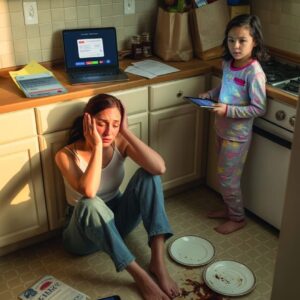
My sister emptied my bank account and disappeared overseas with her boyfriend. I sat there frozen, staring at the zero balance — until my nine-year-old daughter, Maya, looked up from her tablet and said, “Mom, it’s okay. I’ve got this.” I had no idea what she meant. A few days later, my sister called from the other side of the world, screaming my name. My name is Kesha. I’m thirty-four, a data analyst in Atlanta, and a single mother. Friday mornings are usually boring in the safest way — coffee first, laptop open, rent paid, groceries ordered before my first Zoom meeting. That routine was the thin line keeping my life steady. Until the payment screen flashed red. The grocery charge failed. Then the backup card failed too. I refreshed the page. Logged out. Logged back in. Told myself it had to be a glitch. It wasn’t. Checking: a few hundred dollars. Savings — my grandmother’s inheritance, our emergency cushion, Maya’s future college money: $28.14. My hands were shaking when I called the bank. The representative went quiet, and it was the kind of silence that tells you the answer is going to hurt. “Ms. Vance,” she said carefully, “there was a transfer last night for one hundred fifty thousand dollars to an overseas account in Dubai. It was authorized by a secondary user… Monique Vance.” My sister. The same sister who had stood in my Atlanta kitchen three months earlier, crying into a dish towel, promising she only needed to be listed temporarily on my account so she could “look stable” for a lender. “I would never touch your money, Kiki,” she had sworn. “I swear.” Now her phone was already turned off. So I did what I had been raised to do. I called my parents. “Dad,” I said, forcing my voice not to break, “Monique drained my account and ran off to Dubai.” He didn’t even pause. “Stop exaggerating,” he snapped. “She borrowed it. You’re responsible for your own choices. You’ll figure it out. We’ll send her more if she needs help — don’t embarrass your sister.” My mother repeated the same line I had heard my entire life. “She explained the opportunity. Chad sounds smart. Money comes and goes. Family is forever.” Apparently, even when family steals everything. Ten minutes later, my phone buzzed again. A photo from Monique. Champagne glasses. A man I didn’t recognize smiling behind her. Caption: Kiki, I’m sorry, but this is a once-in-a-lifetime opportunity. I’ll pay you back eventually. Please don’t call — international minutes are expensive. Love you. I placed the phone on the counter and slid down to the kitchen floor. Coffee spilled. A plate shattered. Rent was due. Maya’s school tuition was late. My savings were gone. And somehow, I was the one being blamed for reacting. That was when Maya’s bedroom door opened. She stepped out in her pajamas, tablet tucked under one arm, taking in the broken glass, the bank app glowing on my laptop, and her mother sitting on the floor. “Aunt Monique did something bad,” I whispered. “She took everything. The rent. Your school money.” Maya didn’t cry. She didn’t panic. She only tilted her head, those dark eyes far too focused for a nine-year-old, walked over, patted my shoulder, and said in a voice much calmer than mine: “Don’t worry, Mom. I’ll handle it.” I thought it was just one of those things children say when adults fall apart in front of them. I shut myself in my room and spent the next few days staring at loan options, unanswered emails, late notices, and every worst-case scenario I could imagine. What I didn’t know was that while I was spiraling, my quiet little girl in our tiny Atlanta apartment was already fixing everything. And I definitely did not expect the first sign of it to come through a frantic WhatsApp call from Dubai — my sister on the line, hysterical, screaming my name like I had just taken something precious from her. (I know you’re curious about the next part, so please be patient and read on in the comments below. Thank you for your understanding of the inconvenience. please leave a ‘YES’ comment below and give us a “Like ” to get full story ) 👇
My sister emptied my bank account and disappeared with her boyfriend to Dubai. I was heartbroken, staring at the zero balance on my screen, my hands trembling…
“My father shouted that my ‘tiny’ teacher salary belonged to my golden-child brother. He believed he ruled the house—until I placed the deed on the table. ‘You’re right, I’m only a teacher,’ I said softly. ‘And being a teacher taught me how to purchase this house from the bank after you defaulted. You don’t own it anymore, Dad. Legally, you’re trespassing. Please leave.’” Sunday dinner had always felt like a ceremony no one enjoyed but everyone attended. The smell of roasted meat and my mother’s too-sweet perfume hung heavy in the formal dining room of the house where I grew up. My brother Ethan—forever the “golden son”—sat at the head of the table, animated, pitching another “guaranteed success” business idea. This time it involved AI, cryptocurrency, and a flood of trendy buzzwords he’d picked up from a tech podcast. I, Anna—a high school history teacher—kept quiet. I knew Ethan’s track record. Every “can’t-miss” venture had missed spectacularly. Each one drained more of my parents’ savings. My father, Robert, sat upright with pride swelling his chest. In his eyes, Ethan was the legacy. I was stability—predictable, safe, uninspiring. “The only thing I need,” Ethan continued confidently, “is initial capital. Investors want to see family backing first.” My father nodded slowly. Then his gaze shifted to me. “Anna,” he said heavily, “your mother tells me you’ve accumulated a decent savings account.” My stomach tightened. “It’s for a down payment,” I replied carefully. “For my own place.” His fork clattered against the plate as he set it down. “Your own place? This is your place. Your brother needs funding. This is your chance to contribute something meaningful to the family.” I blinked. “Dad, I don’t think—” “You don’t think?” His voice rose sharply. “You’re a teacher. A teacher! What future does that give you? Ethan is building something real. You’ll transfer your savings to him by the end of the week. That’s not a request.” I looked at Ethan. He didn’t appear embarrassed. Just impatient. I looked at my mother. She stared at her folded napkin like it contained urgent secrets. They expected compliance. For once, something inside me solidified. “No,” I said quietly. My voice trembled—but it didn’t break. “It’s my money. I worked for it. And I won’t invest in something I don’t believe in.” Silence fell like glass shattering. Ethan looked offended. My mother inhaled sharply. My father didn’t argue. He exploded. “You dare defy me?” he thundered, standing abruptly. “In my own house?” He moved fast—too fast. Not as a father trying to persuade, but as someone determined to reassert control. His hand struck my cheek with a sharp crack that seemed to echo off the chandelier. I stumbled backward, losing my balance and hitting the Persian rug. The room felt suddenly very small. I didn’t cry. I didn’t scream. Instead, I slowly stood. My cheek burned, but something inside me felt oddly steady. “You’re right,” I said quietly, meeting his eyes. “I’m just a teacher.” He sneered, expecting surrender. “But being a teacher,” I continued evenly, reaching into my bag, “taught me how to read contracts.” I placed a folder on the dining table. “I learned how foreclosures work,” I added. My father’s expression flickered. “When you defaulted on the second mortgage two years ago,” I said calmly, “the bank quietly listed the property. You were too proud to tell anyone.” Ethan’s head snapped toward him. “I bought it,” I finished. “Through a holding company. Paid in full.” The air shifted. My father stared at the documents like they were written in another language. “You don’t own this house anymore,” I said, my voice almost gentle. “I do.” Silence. “And legally,” I added, holding his gaze, “you’re no longer the authority here.” The room that had always felt like his kingdom suddenly felt… smaller. He opened his mouth, but nothing came out. For the first time in my life, he wasn’t the loudest person in the room. And that was only the beginning. Full story below 👇
The Sunday dinner ritual had become a performance I’d grown to dread, though I showed up every week like a dutiful daughter because some habits are harder…
I was at airport security, belt in my hands, boarding pass on the tray. Then an airport officer stepped up: “Ma’am, come with us.” He showed me a report-my name, serious accusations. My greedy parents had filed it… just to make me miss my flight. Because that morning was the probate hearing: Grandpa’s Will-My Inheritance. I stayed calm and said only: “Pull the emergency call log. Right now.” The officer checked his screen, paused, and his tone changed – but as soon AS HE READ THE CALLER’S NAME… My belt was looped over my wrist like a leash and my boarding pass lay flat in the gray tray, so light it felt like a challenge. Shoes off. Laptop out. Liquids in their little plastic pouch. The TSA line moved in that slow, irritated shuffle where nobody makes eye contact but everybody silently evaluates. I kept looking up at the clock above the checkpoint, urging it to move faster. This wasn’t a vacation. This was a race. My grandfather’s probate hearing was scheduled that morning in Rio Arriba County. The kind of hearing that takes grief and turns it into documents—names beside property, signatures attached to money, the court deciding what gets transferred and what gets disputed. Since Grandpa’s funeral, my parents had been hovering around that day like it belonged to them. “We’ll handle it,” they’d said. “You’ll only complicate things,” they’d insisted. They wanted me gone. They wanted the judge to see an empty chair when my name was called, so they could smooth it over with concern and lowered voices and the narrative they’d already prepared: Nina’s emotional. Nina’s unstable. Nina can’t be trusted with important matters. The tray rolled forward. I stepped toward the metal detector. That’s when a uniformed airport police officer moved into my path. Not TSA. Not a supervisor in a blue shirt. Airport police—dark uniform, badge, composed face that didn’t belong to an ordinary travel day. His partner shifted beside him, half a step behind, the way trained professionals position themselves when they don’t want you making a sudden move. “Ma’am,” he said, voice quiet but firm. “Come with us.” For half a second, my mind rejected the sentence. Me? I glanced over my shoulder like he’d confused me with someone else. He didn’t blink. His partner’s gaze remained on my hands. My stomach tightened, but my voice stayed level. “What is this regarding?” “We need to ask you a few questions,” he said. “Immediately.” The TSA line behind me fell silent in that particular airport way—people pretending not to stare while their curiosity tilts forward. I felt the weight of eyes, the prickle of phones, strangers already deciding which version of me they’d recount later. I looked at my tray—belt, wallet, boarding pass—my hands suddenly bare in the most exposed way. “I have a flight,” I said evenly. “You need to come with us,” he repeated. His partner adjusted her tone without relaxing her posture. “Just bring your identification if you have it.” Slow movements. No sudden gestures. I reached into my carry-on and retrieved my driver’s license, holding it between two fingers like an offering of peace. The officer took it, examined it, then gestured toward a glass-walled office to the side. A desk. A chair secured to the floor. The kind of room designed to make you feel culpable even when you’ve done nothing wrong. He sat across from me and asked, “Is your name Nina Holloway?” “Yes,” I replied. He opened a tablet and scrolled, the glow of the screen faintly illuminating his face. “I’m going to read what was submitted. Then you can respond.” I didn’t interrupt. I didn’t beg. I didn’t unravel. I’d learned something about authority the hard way: the quickest way to lose is to hand them your fear and hope they’ll treat it kindly. He cleared his throat. “We received a report this morning. The caller states you’re traveling today and may pose a risk.” Risk. Continued in the first c0mment ⬇️💬
The Caller’s Name My belt was looped over my wrist and my boarding pass lay flat in the gray tray, so light it felt like a dare….
My father signed a Do Not Resuscitate order to avoid the cost of surgery. He never expected what happened after I woke up. “Let her go. We’re not authorizing the procedure,” my father told the doctor while I lay unconscious in St. Catherine’s ICU. He signed the DNR like he was checking a box and walking away. Three weeks later, I opened my eyes to harsh hospital light and the steady rhythm of a monitor—a sound I’d heard for years on the other side of the bed. The first face I saw wasn’t my father’s or my sister’s. It was Pat Walsh, our head nurse, holding my hand. My name is Wendy Thomas. I’m twenty-nine years old. I’m a registered nurse. Pat didn’t begin with comfort. She began with facts. My father had visited once. He went straight to billing, asked for estimates, then told the surgeon no additional procedures were authorized. She placed a copy of an incident report on my blanket—timestamped 11:18 p.m., Tuesday night, my father’s signature beneath DNR authorization. When he finally came to see me, he brought flowers and carefully practiced grief. He squeezed my hand and said, “I never left your side,” as if the nurses hadn’t watched the hallway remain empty. I didn’t challenge him. I smiled and let him perform. Because while I was unconscious, he’d made another move. Not on my body. On my grandmother’s house in Norristown—the small brick home on Elm Street with the porch swing that creaked in the wind. Seven months before she died, my grandmother had whispered something I didn’t understand. “When the time comes,” she said, “a man named Kesler will find you.” Lying in that hospital bed, I searched my phone and found the number I had saved and forgotten. A calm voice answered. “Donald Kesler.” I gave my name. He didn’t sound surprised. Instead, he asked, “Has your father been near your grandmother’s property recently?” He checked county records. Then his tone changed. “The deed was transferred,” he said. “And a new mortgage has been filed against the property.” I asked Pat for a pen. I asked Kesler for the filing numbers. Pat watched me write dates, amounts, and names. “Wendy,” she whispered, “are you sure you’re strong enough for this?” I looked at my nurse’s badge clipped to the bedrail—a reminder of who I was before the coma. “I’m not fighting,” I said quietly. “I’m documenting.” That afternoon my father texted: Don’t worry. I’m handling Grandma’s estate. I replied: Thanks, Dad. Then I turned the phone face down. By the next morning, Kesler outlined the next steps, and my grandmother’s plan finally came into focus. It wasn’t loud. It wasn’t emotional. It was legal. Twenty-four hours after I regained consciousness, my father’s accounts were frozen and his certainty began to fracture. He called repeatedly. For the first time in my life, I let it ring. Because he forgot something important about me. I wasn’t raised to argue. I was raised to keep records. Do you want to know what was inside Kesler’s file… and what my father saw when the bank stopped returning his calls? Details are in the first comment.
The voicemail from the hospital billing department arrived three weeks after I opened my eyes. I was sitting in my friend Deborah’s apartment, still moving carefully because…
At a holiday lunch, my mother leaned toward me and murmured, “It’s time you stop depending on the family.” No one else paused their meal. I drove home in silence, opened my laptop, and calmly removed every bill, loan draft, and cabin expense I had quietly been covering for years. Three days later, my brother called yelling that the cabin’s heat had been shut off. A week after that, my mother received a legal notice she never saw coming… I remember passing the bread basket to my older brother and thinking the whole room felt staged. Like we were actors who had memorized our lines. “More potatoes?” my mom asked brightly. “Sure,” my dad replied, smoothing his napkin like presentation mattered more than comfort. Bobby made a joke about winter weight. Steven nodded along about the weather. My mother laughed in small, measured bursts, like even her laughter had boundaries. I reached for the gravy when she leaned closer. Just a slight shift of her shoulder, her perfume cutting through the smell of roasted vegetables. Without looking at me, she said quietly, “Kinsley, you need to stop relying on the family.” My hand hovered in midair. For a second, I assumed I’d misheard her. The sentence sounded too tidy, too rehearsed, to belong in a room filled with clinking forks and soft music. “Sorry?” I managed. She placed a carrot on her plate, dabbed her lips, then finally turned her head slightly. “You need to grow up,” she added calmly. “We can’t keep carrying you.” The room didn’t fall silent. That was what hurt. The music continued. Bobby sipped his drink. Steven cleared his throat. My dad sliced his turkey into precise squares. No one said, “What do you mean?” No one even pretended to deflect. If anything, their silence confirmed it. My mind flashed through images too quickly to hold. Me at nineteen, picking up Steven at 3 a.m. because he called me instead of a cab. Me at twenty-two, filling out Bobby’s hospital paperwork while he joked with the nurse. Me at twenty-five, handling utility accounts, property taxes, maintenance requests because “you’re good at this stuff, honey.” Me three months ago, paying the cabin’s heating bill at midnight so Mason’s ski weekend wouldn’t be “ruined.” Me, every year, smoothing, fixing, funding. And somehow, I was the one leaning. “Mom just means maybe some independence would be good,” Steven muttered, eyes down. “You’ve seemed… distant.” Distant. The word almost made me smile. Distant was what they called you when you stopped being instantly available. Distant was the label you earned when “sure” turned into “I can’t.” Bobby swirled his drink. “If you’re struggling, just say that. No one’s judging.” There it was. The storyline they preferred. Not that I’d carried half the weight for years. Not that they’d grown comfortable with it. Just that I was the burden. I looked at my mother. She met my eyes finally, and there was no hesitation there. This wasn’t impulsive. She’d prepared it. Chosen her timing. Expected tears or a defense she could dismantle. Instead, I said, evenly, “Okay.” Her expression flickered. That hadn’t been part of her script. I pushed my chair back. The scrape across hardwood cut through the room. My dad glanced up briefly. Steven shifted but stayed quiet. Bobby watched me like someone mildly entertained. “I’m heading out,” I said. “Let’s not be dramatic,” my mother replied, irritation slipping through. “I’m not,” I answered. “I just heard you.” That unsettled her more than an argument would have. I finished my water, set the glass down carefully, and walked toward the hallway. No one stopped me. No one asked me to stay. In the mirror by the door, my reflection looked steady. Composed. You’d think I was leaving early for another engagement. Behind me, I heard laughter. Someone asking for cranberry sauce. I stepped outside. The cold air hit me sharp and honest, nothing like the manufactured warmth inside. My breath fogged in front of me as I stood there, listening to the muffled hum of a family continuing without me. Then I got in my car. The silence was immediate. No tears came. No shaking hands. Just a clarity so precise it almost felt clinical. They believed it. They believed I depended on them. It was like realizing you’d been living behind a one-way mirror your entire life. I started the engine. As I drove away, the house shrank in my rearview mirror—glowing, polished, picture-perfect. Photographs never show the quiet ways someone disappears inside their own family. She thought they were her safety net. They thought she was the weight. Don’t miss what happens next 👇
Holiday lunch always looked good in photographs. If you had glanced in from the outside that afternoon—through the dining room window with its tasteful curtain pulled just…