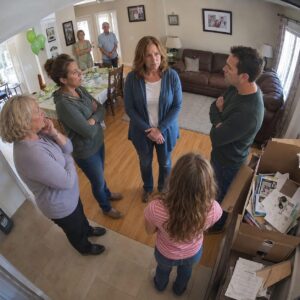
My mother squeezed my wrist before the will was read and whispered, “If you get even a single dollar, I’ll ruin you”… but when the lawyer opened another file, everyone discovered what she had done to keep me away from my grandmother. “If you receive even one dollar from my mother’s inheritance, I will ruin your life.” My mother whispered it into my ear in the lawyer’s office, squeezing my wrist with a strength that did not match her flawless black dress or the calm smile she was giving everyone else. Her name is Miranda, and when she threatens someone, she does not do it impulsively. She does it like a person who has already made up her mind. My name is Jade. I am twenty-eight years old, and I teach second grade at a public school in Charleston. Until that afternoon, I still did not fully understand how far my own mother had gone to keep me away from my grandmother Pearl. But to explain what happened in that room, I have to go back six months, to the last phone call I ever received from my grandmother. It was a Tuesday in September. I was sitting at my apartment table grading spelling notebooks, a cold coffee beside me and a drawing of a horse on a page that had nothing to do with the assignment. My phone rang, and when I saw “Grandma Pearl,” I answered before the second ring, like always. “Grandma? How are you?” Her voice hit me from the first syllable. It was hers, but weaker, as if every word had to force its way out. “Jade, listen to me carefully. No matter what happens… I already took care of it.” I sat up straight. “What did you take care of?” “Promise me you’ll remember that.” “I promise. But tell me what’s going on.” She did not answer. She changed the subject in that way she had of pulling you from worry into warmth within seconds. She asked about my students, about the boy who drew horses on every page, about whether I was still living on sweet bread whenever I was tired. That was my grandmother Pearl: the woman who picked me up from school when my mother “had commitments,” the one who taught me how to make mole without measuring anything, the one who sat me on the patio and said, “Don’t let anyone make you small.” My mother never tolerated that I loved my grandmother more than her. Not because it was not true, but because it was. The next morning, I tried to call her back. My mother answered. “My mom is resting. Don’t call again.” She hung up. I called eleven times that week. Three went straight to voicemail. Twice my mother answered only to hang up. The rest rang until they died. On the eighth day, I drove to my grandmother’s house, in the neighborhood where she had lived her entire life. The porch light was off. That alone was strange. My grandmother left it on every night “so the darkness wouldn’t feel so alone,” she used to say. I knocked. No answer. I knocked harder. Then Travis, my mother’s husband, appeared, filling the doorway with his arms crossed and his boots still on. My grandmother hated people coming inside with dirty boots. “Your mom said she can’t receive visitors,” he said. “She’s my grandmother. I just want to see her for five minutes.” “Don’t add more stress than she already has.” And he shut the door in my face. I stood on the porch listening to the lock click. I did not leave right away. I looked at my grandmother’s bedroom window. Behind the curtain, the yellow lamp she had owned since I was a child was on. She was there. Just a few meters away. And I could not reach her. That was the moment I understood my mother was not caring for my grandmother. She was controlling her. Three months passed. Every Sunday, I sent her a card by mail. Small things. That one of my students had finally learned to read a difficult word. That I tried her capirotada recipe and burned the top. That I missed her. I never knew if she received them. My mother called me only once during those months. “My mom is going to change some things in her estate. Don’t make a scene.” “What things?” “Whatever she wants. You better focus on your little job.” My little job. Yes, I did not earn much. But I taught seven-year-olds how to read. And still, every time my mother said “your little job,” she said it like I was a child pretending to be an adult. I looked for lawyers. The retainer alone was almost three months of rent. I had no proof. Just eleven unanswered calls, a closed door, and a feeling that drilled into my chest. Until one night in November, I received a message from an unknown number. “Your grandmother is in palliative care. She asks about you every day. Sorry. I can’t say more. Don’t abandon her.” I read that message seven times. I held it like it was a person. The next morning, I remembered something: years earlier, my grandmother had listed me as a secondary contact on her medical insurance. I found an old card where I had written down the policy number. I called. After forty minutes on hold, an operator confirmed she was being treated in a palliative care unit in Beaufort. I went immediately. The receptionist checked the system, then looked at me with a pity that broke me. “You are not on the authorized visitors list.” My mother had made a list to decide who could say goodbye to her own mother. And I was not on it. I sat in my car for an hour without turning it on. Then I saw a nurse coming out through a side door, exhausted, with a cloth bag over her shoulder. She looked at me a few seconds longer than normal. Like she wanted to say something. Like she could not. Two weeks later, my mother called me at seven in the morning. “My mom died today. The funeral is Thursday. Dress appropriately.” That was it. Not a “I’m sorry.” Not a “she asked about you.” Just instructions. At the funeral, while my mother cried for everyone and repeated that she had been with my grandmother “every day, until her last breath,” I felt a hand on my shoulder. It was the nurse from the parking lot. She leaned in and whispered: “Your grandmother talked about you every day.” Before I could react, she disappeared into the crowd. And a week later, when the lawyer began reading the will and everything seemed to be going to my mother, I was already starting to believe my grandmother had not been able to save anything. Until the lawyer set aside the first set of documents, placed another envelope on the table… and all the color drained from my mother’s face. (I know you’re curious about the next part, so please be patient and read on in the comments below. Thank you for your understanding of the inconvenience. please leave a ‘YES’ comment below and give us a “Like ” to get full story ) 👇 Posted onMay 27, 2026 ByadminNo Commentson My mother squeezed my wrist before the will was read and whispered, “If you get even a single dollar, I’ll ruin you”… but when the lawyer opened another file, everyone discovered what she had done to keep me away from my grandmother. “If you receive even one dollar from my mother’s inheritance, I will ruin your life.” My mother whispered it into my ear in the lawyer’s office, squeezing my wrist with a strength that did not match her flawless black dress or the calm smile she was giving everyone else. Her name is Miranda, and when she threatens someone, she does not do it impulsively. She does it like a person who has already made up her mind. My name is Jade. I am twenty-eight years old, and I teach second grade at a public school in Charleston. Until that afternoon, I still did not fully understand how far my own mother had gone to keep me away from my grandmother Pearl. But to explain what happened in that room, I have to go back six months, to the last phone call I ever received from my grandmother. It was a Tuesday in September. I was sitting at my apartment table grading spelling notebooks, a cold coffee beside me and a drawing of a horse on a page that had nothing to do with the assignment. My phone rang, and when I saw “Grandma Pearl,” I answered before the second ring, like always. “Grandma? How are you?” Her voice hit me from the first syllable. It was hers, but weaker, as if every word had to force its way out. “Jade, listen to me carefully. No matter what happens… I already took care of it.” I sat up straight. “What did you take care of?” “Promise me you’ll remember that.” “I promise. But tell me what’s going on.” She did not answer. She changed the subject in that way she had of pulling you from worry into warmth within seconds. She asked about my students, about the boy who drew horses on every page, about whether I was still living on sweet bread whenever I was tired. That was my grandmother Pearl: the woman who picked me up from school when my mother “had commitments,” the one who taught me how to make mole without measuring anything, the one who sat me on the patio and said, “Don’t let anyone make you small.” My mother never tolerated that I loved my grandmother more than her. Not because it was not true, but because it was. The next morning, I tried to call her back. My mother answered. “My mom is resting. Don’t call again.” She hung up. I called eleven times that week. Three went straight to voicemail. Twice my mother answered only to hang up. The rest rang until they died. On the eighth day, I drove to my grandmother’s house, in the neighborhood where she had lived her entire life. The porch light was off. That alone was strange. My grandmother left it on every night “so the darkness wouldn’t feel so alone,” she used to say. I knocked. No answer. I knocked harder. Then Travis, my mother’s husband, appeared, filling the doorway with his arms crossed and his boots still on. My grandmother hated people coming inside with dirty boots. “Your mom said she can’t receive visitors,” he said. “She’s my grandmother. I just want to see her for five minutes.” “Don’t add more stress than she already has.” And he shut the door in my face. I stood on the porch listening to the lock click. I did not leave right away. I looked at my grandmother’s bedroom window. Behind the curtain, the yellow lamp she had owned since I was a child was on. She was there. Just a few meters away. And I could not reach her. That was the moment I understood my mother was not caring for my grandmother. She was controlling her. Three months passed. Every Sunday, I sent her a card by mail. Small things. That one of my students had finally learned to read a difficult word. That I tried her capirotada recipe and burned the top. That I missed her. I never knew if she received them. My mother called me only once during those months. “My mom is going to change some things in her estate. Don’t make a scene.” “What things?” “Whatever she wants. You better focus on your little job.” My little job. Yes, I did not earn much. But I taught seven-year-olds how to read. And still, every time my mother said “your little job,” she said it like I was a child pretending to be an adult. I looked for lawyers. The retainer alone was almost three months of rent. I had no proof. Just eleven unanswered calls, a closed door, and a feeling that drilled into my chest. Until one night in November, I received a message from an unknown number. “Your grandmother is in palliative care. She asks about you every day. Sorry. I can’t say more. Don’t abandon her.” I read that message seven times. I held it like it was a person. The next morning, I remembered something: years earlier, my grandmother had listed me as a secondary contact on her medical insurance. I found an old card where I had written down the policy number. I called. After forty minutes on hold, an operator confirmed she was being treated in a palliative care unit in Beaufort. I went immediately. The receptionist checked the system, then looked at me with a pity that broke me. “You are not on the authorized visitors list.” My mother had made a list to decide who could say goodbye to her own mother. And I was not on it. I sat in my car for an hour without turning it on. Then I saw a nurse coming out through a side door, exhausted, with a cloth bag over her shoulder. She looked at me a few seconds longer than normal. Like she wanted to say something. Like she could not. Two weeks later, my mother called me at seven in the morning. “My mom died today. The funeral is Thursday. Dress appropriately.” That was it. Not a “I’m sorry.” Not a “she asked about you.” Just instructions. At the funeral, while my mother cried for everyone and repeated that she had been with my grandmother “every day, until her last breath,” I felt a hand on my shoulder. It was the nurse from the parking lot. She leaned in and whispered: “Your grandmother talked about you every day.” Before I could react, she disappeared into the crowd. And a week later, when the lawyer began reading the will and everything seemed to be going to my mother, I was already starting to believe my grandmother had not been able to save anything. Until the lawyer set aside the first set of documents, placed another envelope on the table… and all the color drained from my mother’s face. (I know you’re curious about the next part, so please be patient and read on in the comments below. Thank you for your understanding of the inconvenience. please leave a ‘YES’ comment below and give us a “Like ” to get full story ) 👇
My mother squeezed my wrist before the will was read and whispered, “If you receive even a single dollar of my mother’s inheritance, I will ruin your…
I lied to my father and told him I had failed the entrance exam, even though my score was 98.7. He simply answered, “Get out of the house.” I did not cry. I did not beg. Because I already knew that house had never been a home… it was a trap waiting for my signature. The phone screen lit up my face in the dark. 98.7 percentile. Ranked among the very best. My mother would have cried from pride. My father would not. From the living room, I heard Celia, my stepmother, laughing, and the excited voice of Arthur Reed, the man who still had the nerve to call himself my father. “Lily is really going to make us proud,” he was saying. “That girl deserves a huge celebration.” My girl. That was how he spoke about Lily. To him, I was only “the burden.” I took a deep breath, called his number, and waited. He answered, sounding irritated. “What do you want, Dianne?” “The results are out.” There was a brief silence. “And?” I looked at the 98.7 one more time. Then I told the coldest lie of my life: “I didn’t make it, Dad. I failed.” On the other end, I heard his heavy breathing. Then his voice came—hard, dry, without a single drop of sadness. “I gave you food, school, a roof over your head… and this is how you repay me?” I did not answer. “You’ve embarrassed me.” I swallowed hard. “Dad…” “Don’t come back. There is no room in this house for useless people.” He hung up. I stared at the black screen. Not one tear. Not a single one. Because two weeks earlier, I had walked past his study and heard the truth behind everything. The door was slightly open. Celia was speaking softly, but her words were laced with poison. “Dianne just turned eighteen, Arthur. You can finally take that house her mother left her.” I froze. My mother’s house. The only thing she had managed to protect before she died. A beautiful historic brownstone in Brooklyn Heights. The deed was in my name, with full control handed to me when I turned eighteen. Celia continued: “Lily wants to study in Europe. That’s expensive. If we sell that house, we’ll be set.” My father sighed. “The will is clear.” “So what? She’s a kid. You’re her father. Make her sign.” There was silence. Then he said something that tore away the last shred of love I still had for him: “When she fails the exam, I’ll kick her out. She’ll realize she’s nothing without me. When she’s desperate enough, I’ll throw her a few bucks, and she’ll sign whatever I want.” Celia laughed. I stopped breathing. I went back to my room, locked the door, and turned on my phone’s voice recorder. The next day, I hid the phone behind a planter in his study. I recorded everything. Their plan. The forged renunciation papers. The pressure. The hunger. The way my own father planned to break me so he could steal the only thing my mother had left me. That is why I lied. That is why I let him throw me out. That is why, that night, I packed my clothes into a suitcase without making a sound. I did not have much. Three pairs of jeans. Two tops. My documents. My birth certificate. My ID. A copy of the will. And a small wooden box with a photo of my mother. In the photo, she was holding me in front of the Brooklyn Heights house. Blooming bougainvilleas filled the background. I was six years old. She was still alive. I pressed it against my chest. From the living room, they were still laughing about Lily’s “bright future.” The irony. I dragged my suitcase to the door. Before leaving, I looked one last time at the hallway where I had so often waited for my father to love me. I did not feel nostalgia. I felt clarity. When I came back, I would not be asking for permission. I was going to take everything back. My Aunt Susan welcomed me that same night at her apartment in Park Slope. She was my mother’s best friend—the only adult who never treated me like I was an obstacle. When she saw me with the suitcase, her smile disappeared. “He kicked you out?” I nodded. I played the recording for her. Halfway through the audio, she started crying. By the end, her fists were clenched. “Your mother chose a terrible husband, but she left behind a very smart daughter.” “Aunt Susan, I need to lay low for a few days.” “You’re staying right here.” “And I’m going to need you to play a part with me.” She did not ask questions. She simply said, “Tell me my lines.” A week later, my father organized a massive party for Lily in a ballroom in Manhattan. Flowers. Live music. Waiters. Photos. A ridiculous banner that read: “Congratulations, Future University Student!” Lily had barely passed her exams. But for Arthur, it was enough. He stepped onto the stage with a glass in his hand, his voice thick with pride. “My daughter is incredible. Intelligent. Disciplined. As a father, I couldn’t ask for more.” The crowd applauded. I was at the back of the room, dressed in black, holding a brown envelope in my hands. Inside were ten copies of my test results. 98.7 percentile. The recording. The will. And a letter my mother had left sealed for this very day. My father had not seen me yet. Neither had Celia. Lily was smiling like a queen. Then my phone vibrated. It was Mr. Santos, my mother’s lawyer. I answered in a whisper. “Mr. Santos, I’m here.” His breathing sounded shallow. “Dianne, listen to me carefully. Do not enter that ballroom yet.” I froze. “Why?” “Because your father just arrived at a notary’s office with a girl claiming to be you.” (I know you’re curious about the next part, so please be patient and read on in the comments below. Thank you for your understanding of the inconvenience. please leave a ‘YES’ comment below and give us a “Like ” to get full story ) 👇
I lied to my father and told him I had failed the entrance exam. My score was 98.7. I told him I had failed because I had…
My husband texted me that he was trapped at work, while kissing his pregnant mistress two tables away from me. I was about to smash a wine glass in his face, until a stranger whispered that the worst part was only just beginning. My phone vibrated against the white tablecloth. “Happy second anniversary, baby,” his message said. I looked up, and Alex had his hand on the back of another woman’s neck. The restaurant was full. Dim lights. Expensive wine glasses. Waiters moving past as if the world was not splitting in half. I had reserved that table on the Upper East Side a week earlier. New dress. Painful heels. My ring freshly cleaned, shining like a cruel joke. And my sea bass untouched, cold, sitting in front of me. Alex had promised he would be there at eight. At quarter past nine, he sent the text. “I’m stuck at work. Happy second anniversary, baby.” For one second, I wanted to believe him. I truly did. But then I saw him. Two tables away. In the side booth. Wearing the shirt I had ironed for him that morning. With the smile he barely gave me anymore. With his hand tangled in the blonde hair of a woman I did not know. And he was kissing her slowly. No hurry. No guilt. As if I did not exist. As if two years of marriage were just forgotten paperwork shoved into a city hall drawer. I looked down at my wine glass. My fingers gripped it so tightly the crystal creaked. I wanted to stand up. I wanted to scream his name. I wanted everyone in that restaurant to see the perfect LinkedIn man, the ideal Instagram husband, the liar sending me heart emojis while kissing another mouth. Then I noticed something else. The woman pulled back a little. She adjusted her dress. And Alex lowered his hand to her belly. A small bump. Round. Protected. Pregnant. I felt the air leave my lungs. It was not only cheating. It was a whole life happening right in front of me without ever asking my permission. I had barely stood up. The glass was already in my hand. And a voice stopped me from behind. “Stay calm… the real show is about to begin.” I froze. I turned slowly. At the next table sat a man in a gray suit, with a neatly trimmed beard and silver at his temples. He was not looking at me with pity. That was what scared me most. He looked at me like someone who already knew my tragedy before I did. “Who are you?” I whispered. He slid a card beside my plate. Nicholas Vance. No logo. No job title. Nothing else. “Someone who knows that kiss isn’t the worst thing Alex has done tonight.” My stomach twisted into knots. “What do you mean?” Nicholas did not answer immediately. He looked toward the booth. Alex was laughing. The pregnant woman stroked his tie. He kissed her fingers. With the tenderness I had been begging for for months. “Don’t make a scene yet,” Nicholas said. “Look toward the entrance in thirty seconds.” I wanted to ignore him. I wanted to walk up to Alex and smash his lie right into his mouth. But something in that man’s voice kept me fixed to my chair. I started counting without meaning to. Twenty. Twenty-one. My hands were shaking. Twenty-two. Alex pulled a small black box from his suit jacket. Twenty-three. The blonde woman covered her mouth, thrilled. Twenty-four. He dropped down on one knee. On our anniversary. Right in front of me. Twenty-five. Some tables began clapping. Twenty-six. I felt like I was dying from humiliation. Twenty-seven. Nicholas murmured: “Now.” Twenty-eight. The restaurant door opened. Twenty-nine. Two uniformed officers walked in. Thirty. And behind them appeared a woman in a black suit, holding a folder, walking straight toward Alex. The music faded. The clapping died. Alex saw her and went pale. Not the pale of a cheater who had been caught. The pale of a ruined man. The woman opened the folder in front of everyone. And before saying a single word, she placed a document on the table with my name written in red…(I know you’re curious about the next part, so please be patient and read on in the comments below. Thank you for your understanding of the inconvenience. please leave a ‘YES’ comment below and give us a “Like ” to get full story ) 👇
My phone vibrated on the white tablecloth. Happy second anniversary, baby. His message read 8:47 p.m. I’m stuck at work. Miss you. I looked up from the…
Just fifteen minutes before my wedding, I noticed something was wrong—the head table had been rearranged: nine seats reserved for my fiancé’s family… while my parents had been pushed aside, left with two plain chairs near a column. His mother smiled and said, “They look out of place here.” So I picked up the microphone… Fifteen minutes before the ceremony, something stopped adding up. Until then, everything had looked exactly the way Michael and I planned it. The venue sat just outside town, a white tent glowing in the late-afternoon sun, the scent of lilies and overbrewed coffee drifting from the catering station, and a string quartet tuning so softly it felt like a whisper behind a wall. I was in the bridal suite at 3:45 p.m., fastening my grandmother’s earrings with hands that trembled from excitement, not fear, while my marriage license packet sat untouched on the vanity beside my lipstick. Then my cousin Megan walked in without knocking. I will never forget her expression. It wasn’t nerves. It wasn’t wedding chaos. It was the look people get when something has already gone wrong—and everyone else decided you should be the last to know. “Emily, you need to come with me. Right now.” My stomach tightened. I lifted the front of my dress and followed her down the hallway, the satin brushing against my hands while the faint scrape of folding chairs mixed with distant music. When I stepped into the reception area, three staff members were adjusting place cards, silverware, and floral arrangements at the head table. At first, I thought it was something minor—a misplaced candle, a last-minute detail. Then I saw the names. To the right of Michael’s seat were his parents. Then his sister and her husband. Then extended family. Nine seats. Nine. I looked again, slower this time, searching for my parents’ names like they might appear if I just looked long enough. They weren’t there. A few feet away, half-hidden beside a column, sat two plain folding chairs. No covers. No flowers. No table. Not even a proper view. Like they had been placed there at the last minute—just so my parents wouldn’t be standing. Like they were an afterthought at my own wedding. “What is this?” I asked. The coordinator hesitated before answering. “Mrs. Sarah requested the change this morning. She said it was a family decision… and that the groom approved it.” “The groom approved it?” She nodded, uncomfortable. The updated seating chart was clipped to her binder, marked FINAL. That’s when Sarah walked in. She moved like someone used to rooms adjusting for her. Perfect dress. Perfect hair. A smile polished just enough to sound kind while saying something cruel. She looked at the head table. Then the chairs by the column. Then me. “Don’t be dramatic, Emily,” she said. “Your parents can sit there. They’re not used to places like this anyway.” For a second, the world went quiet. “This is my wedding,” I said—but my voice didn’t sound like mine anymore. She gave a small laugh, just loud enough for others to hear. “And it’s my son’s wedding too. His family should be front and center. Your parents…” she paused, glancing toward them, “…look uncomfortable trying to fit in here.” I could have snapped. I could have thrown the centerpiece. But I didn’t give her that version of me. I turned and saw my father near the entrance, wearing the suit he had paid off in installments just to walk me down the aisle. One hand stayed in his pocket, hiding how stiff he was. My mother stood beside him, adjusting her purse strap again and again, pretending calm the way mothers do when they refuse to break in public. People don’t always tell you where they think you belong. Sometimes they just place a chair there—and wait for you to accept it. I asked where Michael was. No one answered. That silence hurt more than anything Sarah said. Because if Michael allowed this—if he agreed to push my parents aside to please his mother—then this wasn’t about two chairs. It was about where I would always stand in his life. Sarah had made comments before. About my dad’s simple way of speaking. About my mom’s clothes. About how my family was “nice… but different.” Michael always said she didn’t mean it like that. I wanted to believe him. But trust isn’t built in easy moments. It’s proven when things get uncomfortable. My eyes landed on the microphone near the lectern. Megan grabbed my arm. “Emily… think about this.” I already had. The room shifted as I walked forward. Conversations faded. Glasses paused midair. A server froze with a tray in hand. My father took a step toward me, like he still thought he could protect me from an entire room. My mother stared at the floor, afraid to look up. No one moved. I picked up the microphone and turned toward the guests. My hand didn’t shake. “Before this wedding begins,” I said. The entire tent fell silent. Sarah’s smile tightened. Then I saw Michael at the back—tie crooked, face pale, looking less surprised than afraid. And in that moment, I understood something clearly: The next sentence wasn’t just going to change the ceremony— It was going to reveal exactly what kind of life I was about to walk into… 👇 I know many of you want the next part, so please wait a moment and check the comments below for the continuation. Thank you for your patience and understanding. Comment “YES” and give us a Like to receive the full story. 👇
Fifteen minutes before my wedding, I learned the head table had been changed. Not adjusted. Not fine-tuned for a photographer’s angle or a grandparent who needed the…
For nineteen years, I raised my sister’s abandoned baby as my own, but on his graduation day, she walked in carrying a cake that said “Congratulations From Your Real Mom” — and when my son stepped up to give his valedictorian speech, he looked straight at me and folded the paper in his hands. For nineteen years, I never asked anyone to call me a hero. I simply got up when Dylan cried, went to work with spit-up on my shirt, wrapped Christmas presents in newspaper, and signed every school form with the same steady name: Myra Summers, guardian. Guardian. Not mother. Never mother on paper. But paper is not what wakes up at 2:00 a.m. when a baby can’t breathe through his stuffy little nose. Paper does not learn which cereal makes him smile, which cough means fever, or which silence means his heart is breaking. The gym smelled of floor wax, carnations, and plastic programs folded tightly in nervous parents’ hands. Overhead lights hummed above the basketball banners, and blue-and-gold balloons framed the side doors. I sat in the third row wearing the first new dress I had bought myself in three years. My best friend Claire sat beside me, already crying. “You okay?” she whispered. I nodded, because my son was about to graduate as valedictorian, and I wanted one day where pride was louder than exhaustion. Then the double doors opened. Vanessa Summers entered like she had waited nineteen years for the perfect audience. Emerald dress. Smooth auburn waves. Expensive heels clicking across the gym floor. Beside her walked Harrison Whitfield, the polished real estate investor she had apparently decided should witness her grand return to motherhood. Behind them came my parents, Rita and Gerald, looking stiff and important, like they had spent years rewriting the past and were finally ready to perform their version of it. And in my mother’s hands was the cake. White frosting. Pink letters. Congratulations From Your Real Mom. For one second, the entire gym blurred. Not because I was crying. Because disbelief hit so sharply it felt physical. Real mom. Not the woman who held Dylan through colic in a one-bedroom apartment. Not the woman who gave up a full scholarship at twenty-two because a newborn needed someone, and every other adult had already decided that someone would be me. Not the woman who knew his allergies, his nervous habits, his fevers, his fears, and the voice he used when he was trying to be brave. Real mom. Written in frosting. Vanessa saw me looking and smiled. There was no guilt in it. Only victory. Before the ceremony began, she walked straight toward the graduate staging area. Dylan stood there in his navy cap and gown, tall and steady, his gold tassel brushing his cheek. For one strange moment, he looked nineteen and newborn at the same time. Vanessa opened her arms wide. “Dylan,” she said, loud enough for nearby families to hear. “My baby.” She hugged him tightly. Dylan did not hug her back. His arms stayed at his sides. Then his eyes found mine across the gym. Wait. So I waited. Vanessa came toward me next and placed one manicured hand on my shoulder like she was blessing hired help. “Myra,” she said loudly, “thank you so much for looking after my son all these years.” My whole body went cold. “You’ve been an amazing babysitter,” she continued. “But I’m here now. I’ll take it from here.” Claire’s hand closed around mine. Babysitter. Nineteen years reduced to a job title. I thought about every fever. Every lunchbox. Every parent conference. Every birthday candle. Every winter coat bought too big so it could last another year. Every night I studied after Dylan fell asleep because I still had to build a future with one hand while holding his with the other. I could have said all of it. I said nothing. Because Dylan was still watching me. And his eyes still said: wait. The ceremony began. Principal Harris welcomed the families. The superintendent spoke too long about future leaders. Students crossed the stage one by one, their names echoing through the gym. Vanessa recorded everything on her phone, leaning toward Harrison every few minutes like she was narrating a documentary about a mother reclaiming what belonged to her. My mother kept the cake balanced on her lap. The frosting faced outward. Congratulations From Your Real Mom. By then, the room had noticed. A father two rows away glanced from the cake to me, then looked away too fast. A grandmother pressed her program against her chest. One of Dylan’s classmates stared openly until his mother touched his arm. Nobody knows what to do with cruelty when it shows up dressed for a celebration. Then Principal Harris returned to the microphone. “And now, please welcome this year’s valedictorian, Dylan Summers.” The gym erupted. Dylan walked across the stage, shook the principal’s hand, adjusted the microphone, and looked out over the crowd. For a moment, he followed the speech in front of him. He smiled. He joked about freshman year and cafeteria pizza. The crowd laughed. He thanked teachers, coaches, classmates, and the counselor who helped him with scholarship essays. Vanessa lifted her phone higher. Then Dylan stopped. He looked down at the printed pages in his hands. Slowly, he folded them. The gym grew quiet. “I wrote nine different versions of this speech,” he said. “But this morning, I realized the most important thing I need to say isn’t written on any of these pages.” My breath caught. Vanessa’s phone wavered. “The person I want to thank most today is not a teacher, not a coach, and not a friend,” Dylan said. “It’s the woman who was twenty-two years old when a newborn baby was placed in her arms and everyone told her, ‘He’s your responsibility now.’” Claire started crying beside me. “She had just been accepted into a master’s program with a full scholarship. She gave it up. She moved into a one-bedroom apartment, borrowed a crib, bought dollar-store diapers, and figured out how to survive.” My mother went still. Dylan looked straight at me. “I had colic. I cried for four hours every night. She still held me.” The gym seemed to close in around his voice. “She wrapped my Christmas presents in newspaper because wrapping paper cost too much. She worked while going to school at night. She came to every parent-teacher conference, every awards ceremony, every school play, every moment when a kid looks into the crowd hoping someone showed up for him.” Vanessa lowered her phone. Her smile was gone. Dylan’s voice stayed steady. “She taught me to read before kindergarten. She taught me how to iron a shirt, how to change a tire, how to write thank-you notes, and how to tell the truth even when your voice shakes.” He paused. Then he reached inside his gown. Not for his diploma. Not for the speech. His fingers closed around something small and yellow. Vanessa whispered, “What is that?” Dylan unfolded the faded baby blanket under the gym lights, looked straight past the cake in my mother’s lap, and said… (I know you’re curious to see what happens next, so please be patient and continue reading in the comments below. Thank you for understanding the inconvenience. Please leave a “YES” below and give us a Like to get the full story.) 👇
For nineteen years, Myra Summers had signed the same word on every school form. Guardian. That was how the pediatrician’s office knew her. That was how the…
After my husband passed away, I kept the $28 million inheritance and the penthouse in New York City hidden. That same week, my daughter-in-law shouted, “Now that he’s gone, just cry, pack your things, and go live on the streets.” I simply answered, “Okay.” Three months later, a notice was delivered to their house. Five days after we buried my husband, the house still smelled of sympathy flowers and warmed-over casseroles. The March cold in White Plains clung to the windows, and every room on Maple Avenue felt too quiet in the way a home does when the person who filled it is suddenly gone. I had spent forty years in that house. I had polished those floors, sewn those curtains, and stood at that same kitchen counter at 4:30 every morning while the coffee brewed before my shift at Saint Vincent’s Hospital. By the time we returned from the cemetery, my daughter-in-law was already moving through the living room like she had been waiting for that moment. She did not lower her voice. She did not even pretend to be kind for one more day. She looked at me, still wearing the black dress from the funeral, and said, “Now that he’s gone, cry it out, pack your things, and go live on the streets.” My son stood behind her and said nothing. That was the part I remembered most. Not the cruelty in her voice. Not the yellow sticky notes she had already begun placing on furniture that had belonged to me for decades. Not even the way our wedding photo had been removed from the mantel and leaned against the wall like it no longer belonged in the room. It was my son’s silence. I thought about all the years that had led to that moment. The double shifts. The holidays missed at the hospital. The money quietly stretched and saved and handed over whenever he fell short. The small humiliations I had explained away because he was my only child and I kept telling myself that family has seasons, that grief makes people strange, that decency eventually returns if you give it enough time. So I said the one word neither of them expected. “Okay.” No tears. No scene. No begging to stay in the house I had helped build. I simply slipped my hand into the pocket of my coat and wrapped my fingers around the small brass key my husband had pressed into my palm three weeks before he died. “Keep this safe,” he had whispered in the hospital. “And don’t tell anyone.” At the time, I thought it was the medication talking. By that afternoon, standing in my bedroom with a stack of legal papers laid neatly across my bedspread, I understood he had been trying to tell me something I had failed to hear in time. The papers were ready for my signature. A voluntary transfer. The house, the property, everything pushed neatly toward my son while I was still wearing mourning black. So I packed one small suitcase. Two sweaters. My nursing shoes. My Bible. My mother’s quilt. The framed photo from my wedding day. In the kitchen, I left the signed papers on the table, picked up my old purse, and checked for three things: my wallet, my flip phone, and that brass key. That night, I sat alone in a cheap motel off Route 119, staring at a lamp with a cracked shade and a vending machine dinner I could not make myself touch. Somewhere between the sound of traffic outside and the hum of the ice machine down the hall, I remembered the business card my husband had slipped into my purse months earlier. An estate lawyer. A Manhattan address. 47th Street. I called. The man answered as though he had been waiting for me. The next morning, before sunrise, I took the bus into Manhattan carrying everything I still owned in one suitcase and one purse. At 9:07 the next morning, inside a quiet bank on 47th Street, a woman in a gray suit took the brass key from my hand, looked at the number stamped into it, and stopped calling me ma’am. She picked up the phone, said four words in a lower voice, and everything about the room changed. I know many of you want the next part, so please be patient and check the comments below for the continuation. Thank you for your understanding. Comment “YES” and give us a Like if you want the full story. 👇
My daughter-in-law told me to get out five days after we buried my husband. Not suggested it. Not implied it. She looked me in the eye in…
My family always treated me like unpaid help. I packed my things and moved to Oregon — more than 2,100 miles away from them — without telling anyone. For 19 months, no one called me, until my sister needed a babysitter. Right after that, my mother left 47 voicemails, calling me selfish. I did not call back. I only sent a box through the mail. When they opened it, the thing inside was not what they had expected. For years, I had been the person everyone contacted when something needed to be handled. My mother’s doctor appointments. Her prescriptions at CVS. My sister’s school pickups. Saturday babysitting. Holiday meals. Birthday cakes. Every last-minute emergency that somehow became my responsibility before anyone even asked. They never called it work. They called it family. And I believed them for far longer than I should have. The night I understood it was my birthday. I had bought myself one cupcake after work and eaten it alone in my car, parked under the yellow lights of a strip mall. I kept checking my phone, waiting for one message. Nothing. Then my mother finally called. Not to say happy birthday. She needed me to pick up her medication before the pharmacy closed. That was the moment something inside me went quiet. I did not yell. I did not argue. I did not announce that I was finished. I just started paying attention. For months, I reached out first. I asked my mother to lunch. I asked my sister how she was doing. I sent small messages, the kind people send when they still want to belong to a family. Most of them were ignored. So I stopped chasing. I took a job in Oregon, forwarded my mail, kept the same phone number I had used for twelve years, and waited. Nineteen months. No call on Thanksgiving. No call on Christmas. No call on my birthday. Not one person asked where I was. Then my sister needed a babysitter. That was when my phone finally started ringing. When she found my old Ohio apartment empty, she called my mother. Within one weekend, Mom left 47 voicemails. Not one asked if I was safe. Not one asked if I was okay. Every message was about what I had done to them. So I did not call back. I mailed one box. It arrived at my mother’s house on the afternoon of a child’s birthday party. The kitchen had green balloons, paper plates, and a store-bought cake sitting on the table. Neighbors were in the living room. My sister’s friends were standing by the counter. My mother was dressed nicely, ready to tell everyone how her oldest daughter had abandoned the family. Then someone noticed the plain cardboard box on the hallway table. No ribbon. No note on the outside. Just a Portland return address. My mother picked it up in front of everyone, still wearing the face of a woman who believed the room was on her side. My sister stopped moving. My brother-in-law looked down before the tape was even pulled loose. And when the flaps finally opened, the birthday party changed. My sister reaching for what was inside. Then one quiet question from across the table that nobody in that house was ready to answer. By the time the cake was still sitting half-cut beside the paper plates, I was no longer the daughter who had disappeared. And the people who had spent years treating me like someone useful were suddenly looking at each other like strangers. Because that box did not contain what they expected. It contained the one thing none of them could talk their way around. I know many of you want the next part, so please be patient and check the comments below for the continuation. Thank you for your understanding. Comment “YES” and give us a Like if you want the full story. 👇
My name is Willa Meyers. I’m thirty-three years old, and nineteen months ago I packed everything I owned into a rented U-Haul trailer and drove more than…

I sold my house before Christmas because my family planned to show up with suitcases even after I said no. When my mom called crying and asked, “Where are we supposed to have dinner?”, I realized that to them I was never a daughter—I was just a kitchen, a hotel, and a guilt trip every December. “If they walk into my house again like it’s a free hotel, I’m not opening the door this Christmas—not even if they stand outside crying.” I said it in my kitchen, the dishwasher humming behind me, cinnamon coffee cooling on the counter. Outside, the porch light flickered over the empty driveway—the same driveway my family had filled for years like they owned the place. Michael didn’t laugh. He just glanced at my phone and said quietly, “Emily… they’ve already started.” We lived in a comfortable three-bedroom home with a large kitchen and enough space that my family had unofficially turned it into their Christmas headquarters. Every December, the same message would appear in the group chat like something I was expected to accept. “Emily’s house is easiest.” At first, I took pride in it. I cooked everything. Turkey, ham, sides, desserts, drinks—everything. I laid out towels, made beds, stocked supplies, cleaned nonstop. Then it stopped being appreciation. And became expectation. My brother Chris would arrive days early with his wife, kids, and bags like he had booked a stay. His kids ran through the house, helped themselves to food, left messes behind. Once, soda spilled on the couch—and nobody even offered to clean it. My sister Ashley came with oversized suitcases, used my things, and brushed it off with, “Relax, Em. I’m tired too.” And my mother didn’t help. She supervised. She would stand in the kitchen, taste the food, and say, “It needs more care. Women used to take pride in hosting.” That was her version of gratitude. I stayed quiet. Because if you speak up at Christmas, you become the problem. So I smiled, served, cleaned, washed, reset beds, took out trash—and cried later when the house was empty. Last Christmas broke something in me. Seventeen people. No one brought anything. No one contributed. When I asked for help cleaning, Chris laughed it off. “You’re the organized one.” The next morning, I opened the fridge. The cake I had saved for Michael’s parents was gone. “The kids ate it,” my sister-in-law said casually. “What did you expect?” That was the moment everything clicked. I wasn’t family. I was the service. Kitchen. Hotel. Maid. And the villain if I asked for basic respect. So this year, on Friday night at 7:38, when the group chat filled with plans, I typed one message. “This year I’m not hosting. I need rest. We can meet somewhere else.” I read it three times. Then sent it. The silence lasted less than a minute. “Don’t be selfish,” my mother replied. “We already planned to come,” Chris added. Ashley wrote, “Breaking tradition because you’re too lazy? That’s not a good look.” I set my phone down. My hands were shaking—but I didn’t respond. Some people don’t want boundaries explained. They want them ignored. At 8:11, Ashley posted on Facebook: “Sad when someone values comfort over family.” My mother liked it. Then came comments—from relatives who had never lifted a finger in my house. “Family comes first.” “Some people forget where they came from.” I sat there reading strangers and relatives judge me like I wasn’t the one who had done everything for years. Michael reached for my hand. “Don’t respond,” he said. I wanted to. I imagined posting photos from last Christmas—the mess, the trash, the damage. But anger costs more when you’re the one expected to stay calm. So instead, I documented everything. Screenshots. Times. Messages. 7:38 — I said no. 8:11 — public post. 8:26 — first comment. 8:44 — Chris asking if I had “calmed down.” By 9:14, Michael’s phone buzzed. He looked at it… and went still. “What is it?” I asked. He turned the screen toward me. A message sent to him by mistake. Screenshots from another group chat. They weren’t just talking about me. They were planning around me. There was a sleeping chart. My bedrooms labeled like rentals. Chris: front room air mattress. Ashley: guest room. My mother: main room. Next to it— A full menu. My house. Scheduled. My “no” treated like it didn’t matter. At the bottom, under a photo of my front porch, someone had written: “Don’t worry. She always gives in when we’re already there.” Michael looked at me. Then said quietly— I know many of you want the next part, so please be patient and check the comments below for the continuation. Thank you for your understanding. Comment “YES” and give us a Like if you want the full story. 👇
I sold my house before Christmas because my family planned to show up with suitcases after I had already told them not to come. That sentence still…
An entitled customer left me a $0 tip because of my prosthetic leg — ten minutes later, my manager stepped in and did something no one in that room expected. I’ve been working at this bistro for four years. You get used to the looks. When you walk with a prosthetic, every step makes a sound. A soft click. A quiet thud. Some people pretend not to notice. Others don’t even try. I lost my leg in a fire. A house a few streets away had caught flames. I knew a family lived there — a mother and her young daughter. I didn’t stop to think. I ran in. I got the little girl out. She kept crying for her mom. So I went back inside. I didn’t make it in time. Part of the ceiling gave way and crushed my leg. They couldn’t save it. That little girl lost her mother that night. A year later, I adopted her. She’s my daughter now. Everything I do… is for her. Last week, I was working a double shift. My leg was irritated, every step sending pain through me. But I kept smiling. Because tips mean groceries. School supplies. Stability. Then she walked in. Table four. Designer coat. Perfect hair. The kind of person who scans a room like nothing is good enough. The moment I set her water down, she frowned. “Is that noise necessary?” she said sharply, pointing at my leg. “It’s ruining the atmosphere.” I apologized and tried to walk more quietly, which only made me less steady. She sent her steak back three times — first too rare, then too done, then complaining the sauce was “cheap.” Each time, she added something about me: “Are you always this slow?” “Other tables are getting better service.” By the time I brought her bill, my hands were shaking from exhaustion and humiliation. She signed it. Slid it back. “Don’t expect anything,” she said. I opened the folder. $0.00. And underneath— “Maybe if you didn’t make those sounds, you’d deserve a tip. You’re an eyesore.” My vision blurred. I just stood there. Trying not to fall apart in the middle of the restaurant. Then I heard a voice behind me. “Excuse me, ma’am.” I turned. My manager, David, was standing there. Calm. Professional. Like always. In his hands— a tip jar. He walked up to her table and said, loud enough for nearby guests to hear, “Ma’am… I believe this belongs to you.” She froze. “What? Where did you get that?” she snapped. That’s when I looked closer at the jar. It wasn’t empty. And when I realized what David had just placed inside, my breath caught in my throat. 👇 To be continued in the first comment..
A story about what a woman carries when she walks, and why Every shift at the bistro began the same way. I would push through the side…
My son forgot to hang up, and I heard him call me a burden. So while he and his wife were smiling their way through Italy and France, planning a future that already included my house, I quietly sold the $875,000 home his father and I spent 32 years paying off, packed everything without a word, and returned just in time to watch his key stop working in my front door. The key would not turn. Daniel stood on the porch in his airport clothes, one hand wrapped around a hard-shell suitcase, the other twisting that silver key again and again as if the lock had somehow made a mistake. Melissa stood beside him in oversized sunglasses, shopping bags looped over her wrist, still smiling—until the door refused to open. Then Daniel tried again. Harder. His smile disappeared. He pulled the key out, stared at it, then stared at the door… like the house itself had betrayed him. It had not. I had. Three weeks earlier, my home was still full of framed photographs, Frank’s old chair by the window, and the pencil marks on the laundry room wall where we had measured Daniel year after year as he grew. Cedar Grove was the kind of town where neighbors waved from porches and trimmed hedges on Saturday mornings. Frank and I built our entire life in that house. And somehow… we lost our son there too. After my husband died, Daniel and Melissa began visiting more often. Everyone told me I was fortunate. My son brought groceries. My daughter-in-law brought soup in tidy containers and used that soft, careful voice that made selfishness sound like concern. Then the little comments started. “This house is too much for one person.” “Stairs can be dangerous.” “You really should think about the future.” Daniel talked about taxes. About planning ahead. Melissa sent me photos of neat little retirement communities—white fences, bright flowers, smiling people who looked like they had already been convinced to give up their homes. They acted like they were helping. But they were circling. I found out the truth by accident. The day before their Europe trip, Daniel called while I was upstairs folding laundry. I missed it. A minute later, I saw he had left a voicemail. I pressed play. I expected something ordinary. Instead, I heard a car door slam, Melissa’s real laugh—the sharp one—and then my son’s voice. “She’s a burden, Mel. She just doesn’t see it. We’ve held our lives back long enough.” The towels slipped from my hands. Then Melissa said, “Once the house is handled, everything gets easier.” That was the moment something inside me changed. Not because of the greed. Not even because of the words. But because of how calm they sounded. In that moment, I was not his mother. I was an obstacle. A delay. Something standing between them and what they had already decided belonged to them. I cried that night. I walked through every room in the dark, touching the banister, the piano, Daniel’s old bedroom door, the kitchen counter where Frank used to stand drying dishes. I kept hearing “burden” until it stopped sounding like a word… and started feeling like a sentence. By morning, the tears were gone. I opened Frank’s old files. Then Daniel’s storage box. What I found made everything colder. Emails. Notes. Conversations about power of attorney. Words like “confusion,” “safety,” “transition.” They were not just waiting for me to slow down. They were creating a story around me. So I created my own plan. I called a real estate agent who knew how to move quietly. I called Frank’s lawyer. I called my bank. I moved everything Daniel thought he would eventually control. The house went into a private sale. No sign. No family discussion. No warning. While they were posting photos under European lights, smiling over wineglasses, movers wrapped my dishes, packed my photographs, and carried my whole life out through the front door. The buyer closed quickly. I rented a small place by the lake. And I left one thing behind. A note. So when Daniel and Melissa came home—tan, relaxed, and carrying expensive souvenirs—they did not return to my house. They returned to an empty shell. From inside a parked truck across the street, I watched Daniel finally force the door open. I watched Melissa step in behind him. And I watched both of them freeze when they saw the bare walls… the empty rooms… the silence. Then Daniel saw the white envelope sitting alone on the kitchen counter. With his name on it. I know many of you want the next part, so please be patient and check the comments below for the continuation. Thank you for your understanding. Comment “YES” and give us a Like if you want the full story. 👇
The key would not turn. Daniel stood on my front porch in his airport clothes with one hand resting on a hard shell suitcase and the other…